For many people, an interest in birding starts on safari. You begin by looking for lions and elephants, but soon realise how much more there is to enjoy once you start noticing the birds as well as the animals.
For others their love of birding began in their home country and now they coming to Africa hoping to expand their species list.
Either way, Malawi is hands down one of the best countries for birding safaris in Africa.
With over 650 recorded bird species and an extraordinary range of habitats, it really does offer something special.
It’s a veritable birder’s paradise. Few countries in Africa can rival Malawi’s range of bird species combined with the relative accessibility of its birdwatching. And some of these birds are internationally threatened, making their protection in Malawi particularly important.
Table of Contents
Whilst Lake Malawi, along with the country’s rivers and wetlands, attracts waterbirds such as hamerkops, African fish eagles, kingfishers, egrets and pelicans.
These 650-plus species are spread across Malawi’s remarkably varied landscapes. Some are primarily woodland or grassland birds, such as Livingstone’s flycatcher, red-winged francolin and Lilian’s lovebird.
Raptors, including the African marsh harrier, black-chested snake eagle and peregrine falcon, add further variety, particularly in the highlands of Nyika and Mount Mulanje.
So whether you are a serious birder with a long list of target species, or someone who simply enjoys birdwatching alongside a wildlife safari, Malawi is well worth considering.
Why is Malawi so good for a birding safari?
There are several reasons why Malawi is such a great bird-watching destination:
• A remarkable variety of landscapes, from the cool Afro-montane grasslands of the Nyika Plateau to the lush woodland of Liwonde National Park and the open expanses of Lake Malawi.
Even within one area, such as the Shire river basin, there’s an impressive range of habitats, including rainforest, deciduous forest, miombo woodland, marshes, cliffs and montane grasslands.
Lake Malawi itself, which covers approximately one-fifth of the country and attracts a wide variety of waterbirds.
The relatively compact size of the country (for Africa), which means you can enjoy very different birding habitats on the same holiday.
Its warm subtropical climate, which attracts northern migratory birds from Europe, Asia and North Africa flying south to the African summer.
All of this makes Malawi a particularly interesting destination for keen birders looking to add new species to their lists.
Interested in booking a Safari or Holiday?
Chat to one of our experienced consultants that’s here to help and guide you.
We use our expertise to narrow down the choices and present feasible ideas, so you can relax and ENJOY the planning process!
Contact us!
Best Time for Birding Safaris in Malawi?
With approx. 80% of Malawi’s bird species breeding locally, birdwatching can be rewarding at any time of year.
However, if you want to see the greatest variety, including migratory birds from Europe and North Africa, then the best time is generally from October to April.
To maximise your birding, while perhaps enjoying some game viewing as well, we particularly recommend October to December, or April to May.
But a word of warning about October!
It can be VERY hot in the lower-lying areas before the summer rains arrive. So I would only recommend this month if you can cope reasonably well with heat.
November and December are especially rewarding. Bird numbers are boosted by summer migrants, breeding activity is at its peak for many species, and resident birds are often displaying their most colourful plumage. (This is also the green season in Malawi so prices will be a little keener.)
Summer Closures
January to March brings the heaviest summer rainfall. This can be wonderful for birding, but access becomes more challenging in some areas. Plus most lakeshore camps and some safari lodges also close from early January to mid/late March.
April and May are often a good compromise, with greener landscapes, more comfortable temperatures and plenty of birding opportunities.Malawi so prices will be a little keener.
Mixing Birding with Game-viewing?
If you want to combine birdwatching with a traditional wildlife safari, then I would generally opt for the dry season from May to October.
This is when game viewing is at its best, as the vegetation becomes thinner and animals congregate around permanent water sources.
So the ideal time really depends on your priorities. Are you primarily interested in birding, with some wildlife viewing on the side? Or do you want a more traditional safari with plenty of birdwatching opportunities?
That distinction makes quite a difference to what time I would recommend.
Best Regions in Malawi for Birding Safaris
Broadly speaking Malawi can be divided into four main areas for birding
The Shire River basin in the south, including Liwonde, Majete and Lengwe
The Afro-montane highlands, particularly the Nyika Plateau and Mount Mulanje
Lake Malawi, with its waterbirds and surrounding woodland
The central lowlands, particularly the miombo woodland around Dzalanyama
1) Birding Safaris in Liwonde National Park (Shire River)
Liwonde National Park is one of the best places for birding in Malawi and, I would argue, one of the finest birding destinations in Southern Africa.
With well over 380 recorded bird species, it offers an extraordinary variety in just one national park.
Resident bird numbers are boosted by migrants arriving during the rainy season, particularly from November to March.
And Liwonde is also rich in wildlife, with elephant, lion, black rhino, antelope and plenty of hippos and crocodiles.
One of the great pleasures of Liwonde is birdwatching from a boat on the Shire River.
African Skimmer
The palmnut vulture and Dickinson’s kestrel are often sighted. Flocks of African skimmer compete for the best nesting sites on the sandbanks.
African jacanas and various plovers search the shoreline and floating water lilies for food. White-backed night herons favour the quieter backwaters, while cormorants gather in the riverside trees.
And the colourful Böhm’s bee-eater is another special bird to look out for along the riverbanks.
It is also rich in wildlife with elephant, lion, variety of antelope and plenty of hippos and crocodiles. Boating safaris on the Shire River offer the perfect way to enjoy bird-watching in Malawi.
The palmnut vulture and Dickinson’s kestrel are often sighted. Flocks of African skimmer compete for the best nesting sites on the sandbanks.
African jacana and various plovers search the shoreline and the ever-present water lilies for food. White-backed night herons stalk the quieter backwaters, and hundreds of white cormorants enjoy nesting in the riverside palms. The Böhm’s bee-eater is commonly seen along the riverbanks.
Birding Specials for Liwonde National Park
African pitta
African skimmer
Speckle-throated woodpecker
White-backed night heron
Pel’s Fishing owl – often found on riverine strips.
Lilian’s lovebird, one of Liwonde’s signature birds
Rare brown-breasted barbet
African broadbill
Böhm’s bee-eater
Bat hawk
Livingstone’s flycatcher
Spur-winged lapwing
Lillian’s lovebird
Bohms Bee-eater
Brown-breasted barbet
Naturally, some of these are much harder to find than others, and sightings will depend on the season.
My Recommendation
If you’re a keen birder, I strongly recommend asking for a specialist birding guide in Liwonde.
Yes, it costs more than a regular safari guide, but their knowledge of bird calls and habitats can make a tremendous difference to your experience.
And you don’t necessarily need to book an entire specialist birding safari. We can often arrange dedicated birding activities as part of a broader wildlife holiday.
Recommended Lodges for Birding in Liwonde
Mvuu Lodge – A lovely riverside setting, with excellent opportunities for birdwatching from the lodge and on boat safaris.
Kuthengo Camp – An intimate safari camp overlooking the Shire River floodplains, combining excellent wildlife viewing with rewarding birding.
How to Get to Liwonde National Park?
Liwonde is one of Malawi’s easier national parks to visit, which is another reason I recommend it so frequently.
It is approximately four to five hours’ drive from Lilongwe, around three hours from Blantyre, and only about 1½ to 2½ hours from the southern parts of Lake Malawi, depending on your exact route.
Seat in charter flights from Lilongwe are also be possible.
This makes Liwonde particularly easy to combine with a few days beside Lake Malawi.
2) Birding Safaris on Nyika Plateau
Nyika National Park is an exceptionally scenic birding destination, with rolling montane grasslands and patches of forest in the valleys.
You may well see herds of eland, roan, bushbuck and zebra.
And did I mention that it’s a complete contrast to the rest of Malawi?
The Nyika Plateau feels like another world, with vast open landscapes, cooler temperatures and an entirely different range of birds from the lowland reserves.
Nyika National Park has more than 400 recorded bird species and is particularly important as a refuge for range-restricted grassland and montane forest birds. Such as Black-lored and Churring Cisticolas, Chapin’s Apalis, Brown-headed Apalis, Blue Swallow, Scarlet-tufted Sunbird, Jackson’s Pipit, Yellow-browed Seedeater and the montane widowbird.
Birding Specials for Nyika Plateau
Blue Swallow
Churring Cisticola (as well as short-winged Cisticola)
Wattled crane – commonly seen in the grasslands around Chelinda Lodge
Sharpe’s Akalat (only in one particular forest though)
Augur Buzzard
Stanley’s Buzzard
Bar-tailed trogon
Short-winged Cisticola
Denham’s Bustard
Scarlet-tufted sunbord
Nyika is also home to distinctive regional populations and subspecies, including:
Red-winged Francolin
Baglafecht Weaver
Rufous-naped Lark
Baglafecht Weaver
Churring Cisticola
Wattled Crane
Other interesting highland birds include the yellow mountain warbler, chirping cisticola and mountain marsh widowbird.
For serious birders, Nyika is particularly appealing because it offers a chance to find birds that you are unlikely to encounter in the warmer, low-lying parts of Malawi.
Best time for Birding on Nyika Plateau
A wide variety of birds can be seen throughout the year, but I particularly recommend early summer, especially October and November, when it’s relatively dry.
Breeding activity increases in the forests and grasslands, and there’s an influx of migratory species.
Another advantage is that it isn’t as cold as the main winter months of June to mid-August. And believe me, Nyika can get surprisingly cold!
Recommended Lodges for Birding on the Nyika Plateau
Chelinda Lodge – a lovely base for exploring the plateau, with access to both grassland and forest habitats.
How to get to the Nyika Plateau?
The Nyika Plateau lies in the far north of Malawi, so it takes a little more effort to reach than Liwonde.
But I think it’s well worth it if birding is one of your main interests.
Seat-in-charter flights may be possible, depending on your itinerary.
Alternatively, you can travel north by road with a private guide, perhaps stopping off in the Viphya Highlands, which is also known for its birdlife.
On your return, you could head towards Lake Malawi for a little rest and relaxation on the lakeshore. That would make a lovely contrast to the cooler, high-altitude landscapes of Nyika.
3) Birding Safaris on Lake Malawi
Lake Malawi won’t disappoint you either! It provides wonderful habitat for waterbirds, with the African fish eagle being one of its most memorable residents.
Their distinctive calls are frequently heard echoing across the lake. For me, it’s one of those sounds that immediately says ‘Africa”
More than 100 bird species can be encountered around the lakeshore, depending on the habitat.
Apart from African fish eagles, you may see African harrier-hawks, trumpeter hornbills, white-breasted cormorants, water thick-knees and African paradise flycatchers. Plus plenty of herons, weavers, doves and starlings.
Birding Specials for Lake Malawi
African fish eagle
Marabou stork – one of most impressive birds seen on Lake Malawi
Trumpeter hornbill
Southern masked weaver
Common sandpiper
Brown-headed parrot
Collared palm thrush
Mourning dove
Pel’s fishing owl – in suitable wooded habitats
African Palm swift
African Fish Eagle
Brown-headed Parrot
Pel’s Fishing owl
Lake Malawi is an excellent choice if you want to enjoy birdwatching without devoting your entire holiday to it.
You can spend the morning looking for birds and the afternoon swimming, kayaking or simply relaxing beside the lake.
Not a bad combination!
Recommended Lodges for Birding on Lake Malawi
Pumulani Lodge – An attractive lakeside lodge with opportunities for birdwatching, guided walks and water-based activities.
Mumbo Island Camp – A wonderfully peaceful island setting. However, dedicated birding guides are not generally available here, so it’s particularly well suited to people who already have some birding knowledge.
(We’ve suggested these due to their relative proximity to Liwonde National Park as well.)
How to get to Lake Malawi?
Depending on which part of the lake you choose, much of it is accessible by road from Lilongwe.
If you’re planning to combine Lake Malawi with Liwonde, I generally recommend the southern lakeshore.
Allow around three to four hours from Lilongwe and approximately two hours between the southern lakeshore and Liwonde, depending on your exact accommodation.
Other Notable Areas for Birdwatching in Malawi:
The three areas above are probably my first choices for most birding safaris in Malawi.
However, there are several other places worth considering, particularly if you’re a dedicated birder looking for specific species.
4) Dzalanyama Forest Reserve
Dzalanyama Forest Reserve lies approximately 60km south-west of Lilongwe. It consists largely of miombo woodland and is therefore an important habitat for birds associated with this type of forest.
Around 300 bird species have been recorded here. Dzalanyama is primarily a birding destination rather than a traditional game-viewing reserve. So I would particularly recommend it to keen birders interested in miombo specialities.
Birding specials for Dzalanyama include:
Miombo Pied Barbet
Miombo Tit
Pale-Billed Hornbill
Schalow’s Turaco
Streaky-headed seedeater
Bohm’s Flycatcher
Boulder Chat
Striped-breasted seedeater
Oliver-headed Weaver
Souza’s Shrike
Miombo Pied Barbet
Olive-headed Weaver
Streaky-headed Seedeater
Recommended Lodges
Dzalanyama Forest Camp – This is a simple forest lodge, so the main attraction is definitely the birding rather than the accommodation itself.
A specialist guide is particularly worthwhile here, as many woodland species are easier to locate by their calls than by sight.
Interested in booking a Safari or Holiday?
Chat to one of our experienced consultants that’s here to help and guide you.
We use our expertise to narrow down the choices and present feasible ideas, so you can relax and ENJOY the planning process!
Contact us!
5) Zomba Plateau
The Zomba Plateau lies between Blantyre and Liwonde National Park, so it can be quite easy to incorporate into a southern Malawi itinerary.
It doesn’t have the sheer number of bird species found on the Nyika Plateau.
But the plentiful walking trails through the mountain’s forests make it an enjoyable place to look for some of Malawi’s more colourful and interesting birds.
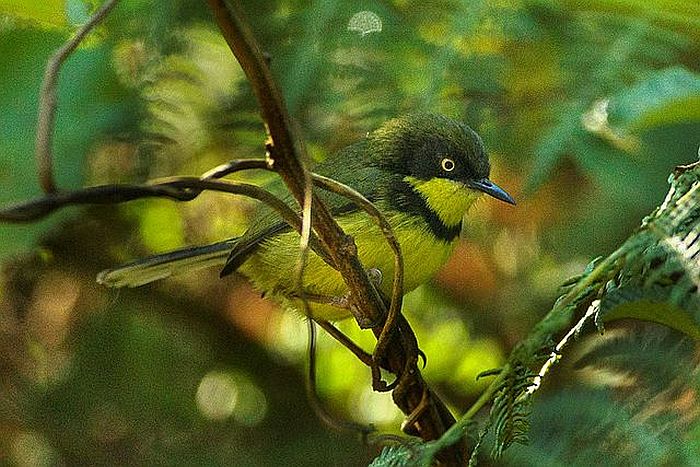
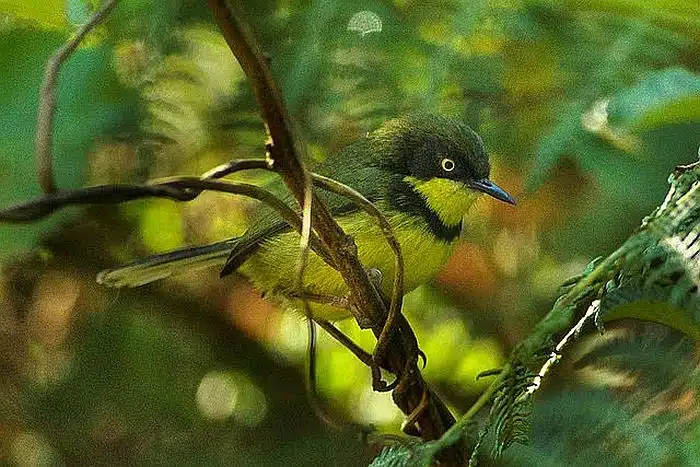
One of the most important is the yellow-throated apalis, Malawi’s only endemic bird species.
This endangered bird is restricted to montane forest habitats in southern Malawi, including Zomba, Malosa and Mount Mulanje.
We recommend the comfortable Sunbird Ku Chawe Inn – A comfortable base for exploring the plateau and enjoying its forest walks.
Birding specials include:
Bar-throated Apalis
Garden Warbler
Cape Batis
Yellow-throated Apalis – endemic to Malawi
Little Greenbul
White-eared Barbet
Magpie
White-winged Apalis
Forest Weaver
Blue-spotted Dove
Cape Batis
Yellow-throated Apalis
Little Greenbul
6) Majete Game Reserve
The beautiful Majete Game Reserve lies within the Shire River basin in southern Malawi.
It offers around 300 recorded bird species, including a variety of raptors such as four vulture species and bateleur eagles.
However, Majete is probably better known for its wildlife.It has been one of Malawi’s great conservation success stories, with the reintroduction of several important species over recent decades.
Today, Majete is one of Malawi’s two Big Five reserves, along with Liwonde National Park.
So you may see elephant, lion, leopard, buffalo and rhino, as well as giraffe, cheetah and occasionally African wild dog.
My advice: If birdwatching is your main interest, I would suggest arranging a private specialist guide. Most visitors to Majete are primarily focused on the larger wildlife, so a dedicated birding guide will help you get much more out of your stay.
Majete shares many of its bird species with other reserves in southern Malawi, including Lengwe and Liwonde.
The best place to stay isMkulumadzi Camp – A beautifully situated riverside safari camp, offering a very good combination of wildlife viewing and birdwatching.
Birding specials include:
Boulder chat
Livingstone flycatcher
Böhm’s Bee-eater
Cuckoo Hawk
Pel’s fishing owl
Rock Pratincole
Livingstone Flycatcher
Bohms Bee-eater
Pied Kingfisher
7) Mount Mulanje
Mount Mulanje is Malawi’s highest mountain, rising abruptly from the plains to over 3,000 metres.
There’s a high plateau at approximately 1,800 to 1,900 metres, with rocky peaks rising above it. Here the Afro-montane environment provides a distinctive habitat for some 180 recorded bird species.
One of the most sought-after is the endangered Thyolo alethe, (also known as the Cholo alethe.)
This elusive forest bird is found only in southern Malawi and neighbouring Mozambique.
Mount Mulanje is also an important habitat for the endangered yellow-throated apalis.
Mount Mulanje is probably more suited to the dedicated birder, particularly someone with an interest in rare montane forest species. But the spectacular mountain scenery is an attraction in its own right.
Birding Specials for Mount Mulanje:
Thylolo (Cholo) Alethe
White-winged Apalis
Little Greenbul
Martial eagle
Crowned eagle
Green-headed oriole
Black eagle
Lanner falcon
Lazy Cisticola
Peregrine falcon
Cholo Alethe
Peregrine Falcon
Green-headed Oriole
Good to Know Before Planning a Birding Safari in Malawi
A few things are worth bearing in mind when planning your trip.
Specialist birding guides: If you have a list of particular birds you want to see, I strongly recommend investing in a good birding guide. Their knowledge of bird calls and habitats can make all the difference.
Time of year: November and December are particularly rewarding for birding, while May to October is generally better for combining with traditional game viewing.
Getting around: Some of Malawi’s best birding destinations, especially Nyika, are relatively remote. Allow enough time to reach them rather than trying to fit too much into one itinerary.
Seasonal lodge closures: Some camps close during the wetter summer months, and roads can become more difficult.
Managing expectations: As any keen birder knows, not every species will oblige! Some of Malawi’s most sought-after birds are elusive, seasonal or restricted to very specific habitats.
How to Start Planning that Birding Safari?
Hopefully, this has whetted your appetite for a birding safari in Malawi and given you a better idea of where to go.
But which areas should you include? That depends on whether you’re a serious birder with a list of target species, or simply someone who enjoys birdwatching alongside a wildlife safari.
At Cedarberg Africa, we can help you work out which areas to combine, when to travel and, importantly, where it’s worth investing in a specialist birding guide, or flying to Nyika Plateau.
We can arrange specialist birding safaris in selected destinations. Or add birdwatching activities into a wider Malawi safari.
We’ll help you put together a Malawi safari that makes the most of your time and gives you the best chance of seeing the birds you’re looking for.
“Birding Safaris in Malawi” was written by Kate of Cedarberg Africa
Kate Bergh is the Co-Founder and CEO of Cedarberg Africa’s South Africa Office. Having travelled extensively through Africa and lived in South Africa for over 30 years, Kate brings a wealth of first-hand knowledge to planning African safaris.
She has a particular love of Africa’s landscapes, wildlife and less-explored regions, with Lake Malawi among her favourite destinations. Kate also believes that even casual birdwatching can greatly enrich a safari experience, and encourages travellers to discover the birds around them, not just the larger wildlife. For birding enthusiasts, this means helping you choose the most rewarding destinations and seasons, and arranging specialist guides where their knowledge can make a real difference. Whether you are a dedicated birder or simply enjoy the wildlife around you, we can create an African birding safari that reflects your particular interests.