Formerly known as Swaziland, Eswatini is a small but striking kingdom between the Kruger National Park to the north and KwaZulu-Natal to the south. Buy basketware, colourful fabrics and carvings in friendly markets or craft shops. Enjoy game-viewing in the scenic Mlilwane or Hlane game reserves. Or some adventure activities such as white-water rafting, rhino tracking on foot or horse-riding. All in a compact, mountainous setting.
Eswatini, formerly known as Swaziland, is one of Africa’s few remaining monarchies, a compact kingdom tucked between South Africa and Mozambique. Often crossed en route between Kruger and KwaZulu-Natal, it deserves more than a passing glance.
The landscape rolls gently from highland forests and deep river gorges in the west to open savanna in the east. Villages dot the hillsides. Women carry woven baskets to market. Roadside stalls display colourful textiles and hand-carved artefacts. And life unfolds at an unhurried pace.
Eswatini (Swaziland) safaris
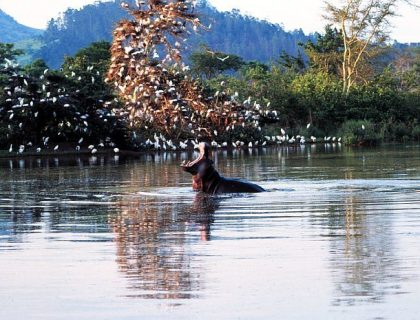
Though small, Eswatini offers surprising ecological diversity — from misty mountain scenery to dry lowveld grasslands. Wildlife experiences are intimate rather than vast: rhino tracking on foot in the more remote Mkhaya Game Reseve, horse-riding, bush walls or even mountain biking through Mlilwane. All offer quieter game drives without the vehicles of larger reserves.
eSwatini is not a headline-grabbing safari destination. It is something more personal - a cultural interlude that adds texture and contrast to a broader South Africa journey. So we strongly recommend a two-night stay so that you have time to enjoy it.
Swaziland - Small in Size, Rich in Character
The Swazis have a well-developed sense of their own culture. And they are open-minded and friendly in their outlook. They are also renowned craftsmen and women. You can buy their basket ware, colourful fabrics, glassware carvings, and Mother of Pearl in friendly markets, roadside stalls and craft shops.
We particularly recommend a visit to Ngwenya Glass, Swazi Candles and Baobab Batik.
Active Options
Eswatini (Swaziland) also offers diverse range of attractions and activities. White-water rafting for the adventurous. Or perhaps a laid-back round of golf, mountain biking, game-viewing or a gentle horse riding safari through the Mlilwane Game Reserve. There is also excellent rhino-tracking on foot in Hlane National Park in northern Eswatini.
Why Include Eswatini in Your Itinerary?
Breaks up the very long drive between Kruger and the coast
Adds a distinct cultural layer
Offers rhino-focused conservation experiences
Slower pace before returning to busier safari regions
We recommend a two night stay in Eswatini. A one night stay is functional but gives you no time to either explore or relax. (The driving is slow with many traditional villages and people or cattle by the roadside.)
Swaziland Lodges
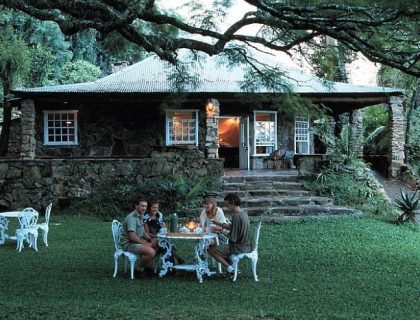
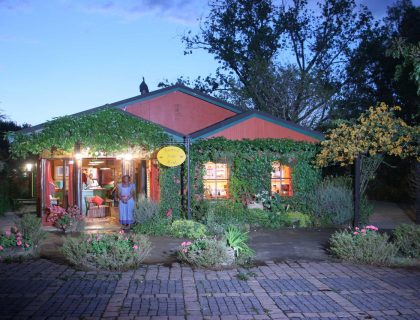
We recommend one of the lodges in the Ezulwini valley. Such as the time-warped Reilly’s Rock Lodge, with its sense of history and tranquil ambience. It lies within the lovely Mlilwane National Park which offers game-viewing, bush walks and horse-riding.
Other options are the traditional Foresters Arms and the Summerfield Garden Resort. Though none are exactly premium in character.
Why We Love It
Remarkable ecological and terrain diversity within such a compact country, almost entirely surrounded by South Africa.
Excellent craft traditions: visit Ngwenya Glass, Swazi Candles and Baobab Batik
Rhino tracking on foot at Mkhaya - an intimate conservation success story
A gentle, low-key safari experience in Mlilwane Game Reserve with the possibility of horse-riding, bush walks and even mountain biking
Easily combined with a road trip between Kruger and KwaZulu-Natal
Strong birdlife across varied habitats; including the blue crane, ground woodpecker and lappet-faced vulture.
A rare opportunity to visit one of Africa’s last absolute monarchies
White-water rafting is on offer for the adventurous
On The Map
When to visit Eswatini
Green Season
Eswatini’s climate mirrors much of eastern South Africa, with warm wet summers and dry sunny winters.
The summer months are warmer with occasional summer rains, usually in short afternoon showers. The countryside is lush and birdlife excellent with the summer migrants. January and February can be hot and humid.
Dry Season (Best for Wildlife)
Eswatini works well year-round, but the dry winter months are particularly pleasant for combining cultural exploration with light safari activities.
Cooler mornings and clear days make this the most comfortable time for exploring. Game viewing improves as vegetation thins and animals gather around water sources.
Chat to one of our experienced consultants that's here to help and guide you.
We use our expertise to narrow down the choices and present feasible ideas, so you can relax and ENJOY the planning process!
Contact us!
Gloria Darvall
AFRICAN TRAVEL SPECIALIST
Hi I'm Gloria, I'm here to help you plan your ideal holiday experience
GET IN TOUCH



 We recommend a two night stay in Eswatini. A one night stay is functional but gives you no time to either explore or relax. (The driving is slow with many traditional villages and people or cattle by the roadside.)