Last Updated:

8 Game Drive Tips to get the Most from your Safari

8 Game Drive Tips to get the Most from your Safari

First Game Drive Ever?

So you’ve arrived at your rather expensive game lodge, and you are keenly awaiting your first game drive. What can YOU do to ensure that you have the best possible game drive experience?

We have put together eight game drive tips to help you make the most of your time in the bush, from choosing your seat to knowing when to put the camera down.

These tips focus mainly on guided game drives at private safari lodges in Southern Africa. Vehicles, schedules and reserve rules vary elsewhere, but much of our advice travels well…

Game Drives in Africa

 1. Understand how a game drive works

Some people like to live in suspense and take life as it comes. If that’s you, you can skip this part! Others get more from an experience if they understand how it works…

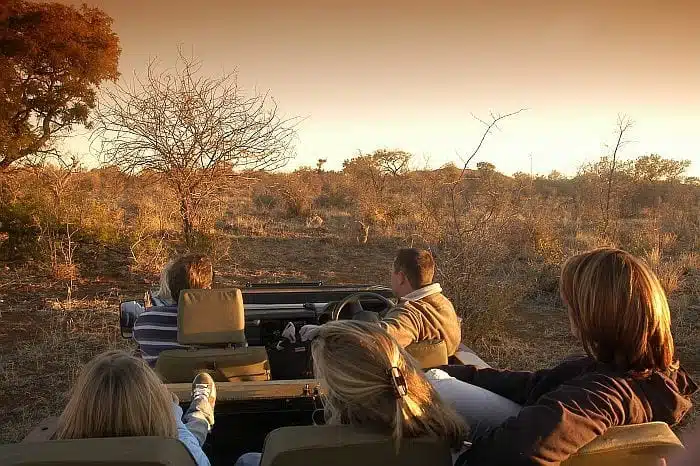
Many private lodges use open safari vehicles with three rows of seats, often stepped up towards the back. Guest numbers vary, so ask how many people normally share a vehicle rather than judging by lodge price alone. But the norm can be anything from 6 people to up to 9 or 10 people in more moderately priced lodges. Whereas the more expensive lodges may set a maximum of 6 people so that everyone gets a “window seat”.

A morning or afternoon drive usually lasts around three plus hours, depending on what you see and the lodge’s schedule. There’s nearly always a break for morning coffee, or evening sundowners on the afternoon drive. Naturally, this is also the opportunity for a bush loo stop if needed. (Always let your guide identify a safe place before getting out on your mission!)

Game drive tips for a successful game drive, Kruger National Park Istock

Your ranger will usually be in radio contact with other guides traversing in the same area. This is a good thing. More eyes in the bush mean more chances of finding something interesting. But there is an etiquette involved here.

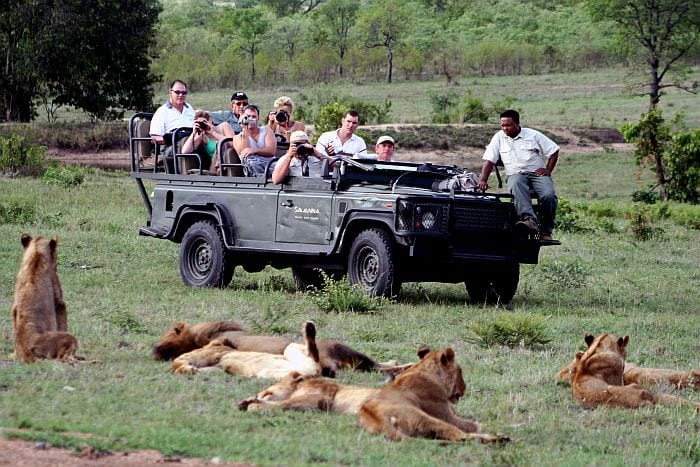
Most private reserves have strict limits on the number of vehicles at a sighting, often to two or three at most, although the rules vary by reserve. Nobody wants ten vehicles converging on a leopard. It disturbs the animal, the tranquillity of the bush and your chances of getting a stunning photo.

So when a vehicle comes across a major sighting such as one of the so-called Big Five, or wild dog cheetah etc, they spend a few minutes enjoying the sighting in peace before radioing in to alert other vehicles.

There follows a delicate ‘dance’ between the rangers as they coordinate who comes in next. This usually depends on their distance away. Sometimes you may find yourselves in a sort of queue. A good ranger will hopefully disguise this fact and use this time to show you something else rather than simply waiting around.

Cedarberg_Africa_Lewa-Safari-Camp-activities-game-drives-700
Cedarberg_Africa_Tanzania-Tarangire-woman-game-drive-SS-700
Cedarberg_Africa_Sabi-Sands-Exeter-Leadwood-Lodge-game-drive-700

If you are second to a sighting, you cannot immediately go in front of the first vehicle and take the best vantage point thus ruining the experience for them. However as they move off, your ranger can move the vehicle into a better spot for photos.

Your ranger will try to ensure that all people on the vehicle can get a decent photo. Please keep in mind that depending on the terrain, the animal’s behaviour, and the lighting, this is not always possible…

Where off-road driving is permitted to follow an animal, your guide still has to consider the terrain, soil conditions and wildlife. What looks fine to you may conceal a steep donga, or ground that would be damaged by driving over it. (A donga is a sharp steep uncrossable cleft in the bush.)

An ”ideal” drive combines exciting wildlife sightings with time to appreciate the animals, the landscape and the chance to learn about the smaller details: birds, plants, tracks and, yes, dung. As the latter will tell you which animal passed by recently.

However, not every drive is an epic one. Some drives are quiet. That is part of watching wild animals on their own terms. Sometimes this is because of the weather – a strong wind or a cold front affects animals as much as humans. Sometimes you’re just not lucky!

Luxury African Safaris

2. Bring the right kit

I go into this in more detail in our What to Wear on Safari guide, but for the game drive itself, try to have the following:

  • A camera or good smartphone, with a charged battery and enough storage.
  • Binoculars – the best you can comfortably afford, ideally one pair each, or at least one between two people.
  • Sunblock, sunglasses and  a hat that won’t disappear at the first gust of wind.
  • Layers, including something warm for early starts. A woolly beanie is invaluable on winter drives.
  • A bird or animal guide, or an app downloaded for offline use. (Books are often for sale in the lodge shop)
  • Tissues, a small rubbish bag and hand sanitiser for bush loo stops. Leave nothing behind. (Though usually the ranger will have this.)
  • Insect repellent for summer, as appropriate for your destination.
  • Reusable Water Bottle
For Families:
  • Simple animal check-list – great for keeping kids motivated
  • Access to photography  – whether it’s a disposable or cheap camera or simply borrowing your phone
  • Binoculars – ideally one for each family member – have I said that before?
  • A small snack, agreed with your guide, if your children are likely to get hungry between stops. (Though plentiful snacks are provided at the morning and evening stops)

I go into this in more detail in our What to Wear on Safari guide, but for the game drive itself, try to have the following:

Family holidays in Africa at Easter
South-Luangwa-Wild-Dogs-With-NCS-game-drive
Ruaha River Lodge - Foxes Wilderness Wildlife Extravaganza

3. Choose your seat carefully

The middle row often gives you the best of both worlds: enough height for good views, without being too far from the ranger to ask questions. However, every seat has its pros and cons.

Beside the ranger: often easier to access for older people, or if you have mobility issues. Often more sheltered in winter. But the lower position may limit views, especially if you are a keen photographer. Ask about the actual vehicle if mobility is a concern.

First row: ideal if you like asking questions, with a good view towards the front. My preference!

Middle row: a good compromise between height, comfort and hearing the ranger.

Back row: a love-it-or-hate-it experience. Usually the bumpiest option and often the coldest in winter, but handy for looking behind you when a pack of wild dogs has just walked past.

My husband reverts to being a naughty schoolboy at the back of the bus, with much giggling and in-jokes with the kids. Others may prefer a little less bouncing.

Important Tip: On a shared game vehicle, be willing to rotate seats between drives. So if everyone wants the seat, make sure you rotate.

If you have back problems or need help climbing aboard, tell the lodge in advance.

Open safari vehicles

4. Ask Questions

This does what it says on the tin. The more you ask, the more you learn. Most rangers have far more knowledge than they can possibly share during a single drive, so keep asking questions.

Why is that elephant flapping its ears? How old are those tracks? What made that alarm call? A quiet stretch can become surprisingly absorbing once you start looking beyond the obvious animals.

But at a close sighting, follow your guide’s lead. Sometimes the best thing to do is sit quietly and watch at first.

Then, when the animal is comfortable, your ranger will start telling you about it. And that’s your cue to start asking questions.

Interested in booking a Safari or Holiday?

Chat to one of our experienced consultants that’s here to help and guide you. We use our expertise to narrow down the choices and present feasible ideas, so you can relax and ENJOY the planning process! Contact us!

5. Divide the Photographic Duties

As a couple, one useful approach is for one person to have a camera with a good zoom lens, while the other is ready for wider scenes using a general or wide-angle lens. A good smartphone can do the second job perfectly well.

That way you are prepared for both the close-up of the lion and the glorious sunset over the waterhole, without constantly changing lenses.

For more practical advice, see our safari photography tips for beginners article.

TIP: Do put the camera down occasionally. This is a note to self as well. It would be a shame to come home with 400 photographs of an elephant and barely remember seeing it, or anything that your guide said, as you were so intent on get the best shot.

Cedarberg_Africa_machaba-safaris-elephant-700
Cedarberg_Africa_Machaba-Camp_game_drive-700

6. Have Realistic Expectations

Some game rangers ask people what they want to see. I can understand why: they want to know whether you are really into birds, elephants or giraffes. But inevitably, someone says leopard or cheetah, , two of the most elusive animals in the bush. No pressure, then!

Do share your interests. Your guide can use that information to shape the drive. Just remember that a request is not a reservation, and sightings depend on the area, weather conditions and a fair amount of luck.

If it’s a quiet drive, ask questions and get your ranger sharing their knowledge. And a fascinating sighting doesn’t have to involve one of the Big Five.

Interested in booking a Safari or Holiday?

Chat to one of our experienced consultants that’s here to help and guide you. We use our expertise to narrow down the choices and present feasible ideas, so you can relax and ENJOY the planning process! Contact us!

7. Have Patience and Be Considerate

Your ranger will try to make sure everyone in the vehicle is happy. That might mean staying longer at a sighting than you personally want, so that everyone can get a good photo. Equally, you may want to linger while others are keen to move on to the next sighting.

Try to go with the flow.

A few simple habits make shared game drives better for everyone:

  • Follow your guide’s instructions and stay seated at sightings.
  • Keep voices low and put your phone on silent.
  • Never call to animals or try to attract their attention.
  • Be mindful of other people’s views when lifting cameras or leaning across seats.

Patience also gives you a chance to watch behaviour unfold. The interesting bit may happen just after everyone else wants to leave.

African Sunsets at their best

8. Consider a Private Vehicle for Birding and Photography

Our final game drive tips is about taking a private vehicle.

A shared game vehicle works well for most people on safari. However, keen birders and photographers may want something rather different from the average safari visitor.

Birders may happily spend half an hour looking for one of the area’s ‘specials’, while their fellow guests are wondering where the lions are. Photographers may want to stay much longer at a sighting, waiting for the perfect light or a particular behaviour.

A private vehicle gives you more flexibility over what to focus on and how long to stay, within the reserve’s rules and your guide’s judgement. It can also be helpful for families whose children need shorter drives.

Book ahead if it matters to you

Please request a private vehicle on booking, rather than assuming one can be arranged on arrival.

Private vehicles usually cost a fair amount extra, and availability depends on vehicles, guides, lodge occupancy and reserve rules.

In South Africa, some reserves have strict rules about the number of vehicles each lodge can send out on a game drive. So private vehicles are often subject to availability. If the lodge is fully booked, they may not be able to fulfil your request.

If you are travelling as a family or small group, compare the extra cost with choosing safari villa or house that includes its own guide and vehicle.

Check our our Wildlife & Safari pages for suggested safari itineraries and game lodges.

Plan a safari that suits you

The lodge matters, but so do the guiding, vehicle arrangements and time you have to enjoy each wildlife area. Whether you are planning your first safari, travelling with children or hoping to spend longer behind a camera, we can help you choose a good fit.

  1. Tell us your dates, approximate budget and who is travelling.
  2. Share what matters most, from birding and photography to fewer people on the vehicle.
  3. We’ll help you choose the reserves, lodges and game drive arrangements that suit you.

Talk to Cedarberg Africa about your safari plans.


“8 Game Drive Tips to Get the Most from your Game Drive” was written by Kate of Cedarberg Africa

Kate Bergh co-founded Cedarberg Africa with her sister Ginny in 1995 and has lived in South Africa for over 30 years. She has explored Africa widely and tested many safari lodges with her own family and friends, bringing first-hand insight into everything from family game drives to choosing the right lodge and vehicle setup.

Share this article

Related articles