2. Water
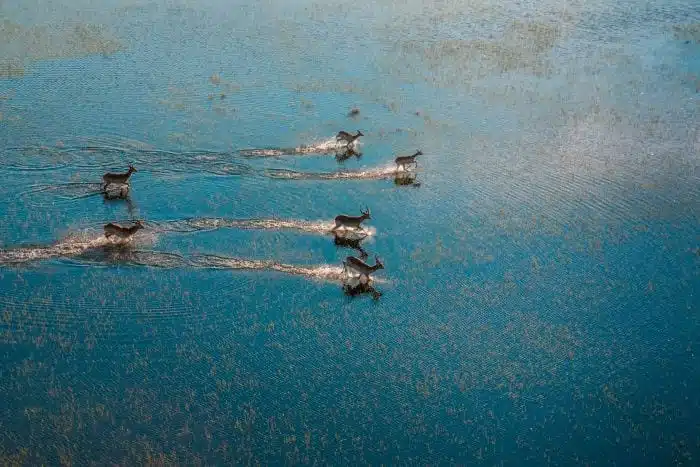
The other reason why the winter months of May to August are generally malaria and mosquito-free in South Africa, and some of the rest of Southern Africa, is that this is the dry season where little to no rain falls. Mosquitoes thrive when there is plenty of surface water during the hot summer rains. So if you plan your safari for August, you will be facing a much lower malaria risk than if you plan your safari for February…
3. People
Malaria is an infection of the blood that is carried from person to person by mosquitoes. If a mosquito bites an infected person, that mosquito can then carry the infection to another person. So malaria thrives in high density areas. This is why malaria is more of a concern in densely populated areas such as Victoria Falls or southern Mozambique than in more sparsely populated areas such as the Okavango Delta or the Makgadigadi pans.
4. When are mosquitos most active
Mosquitoes are most active in the early evening and around dawn—just when you’re likely enjoying a sundowner or heading out on a morning game drive. But because many luxury lodges provide mosquito nets, fans, and repellent, you’re often better protected than you would be elsewhere.
Prevention at the Safari Lodges
The first thing to say is that the safari lodges make a concerted effort to reduce the impact of mosquitoes around the lodge or camp. They spray the chalets with eco-friendly anti-mosquito repellent. Or they put screens on windows. They also may add mosquito nets around beds. So you can have the windows open without worrying about insects.