The Okavango Delta in Botswana is the largest and most beautiful oasis in Africa, one that flows inland and not to the sea.
It is one of Africa’s great natural spectacles — a lush, green paradise amid the Kalahari Desert, with some of the richest wildlife in the world. But this seasonal flood has a twist: the water arrives months after the rains, and recent seismic shifts have subtly reshaped its patterns. So what causes the annual Okavango Delta flood? When does it happen? Why do some lodges have water all year, whilst other only have seasonal water during the flood. (Or not at all?)
Where do the Okavango Delta flood waters come from?
The Okavango Delta is a conundrum – a unique wetland system surviving on the sands of the vast Kalahari Desert in Botswana. The Okavango Delta’s water starts life far from Botswana, in the wet highlands of Angola, some 500km to the north of Botswana. Heavy summer rains there swell the Cubango River, which flows south through Namibia and – gathering ever more water – into Botswana.
Here, it becomes the Okavango River and meets a geological puzzle: a network of ancient fault lines – deep below the desert surface – that dictate its path.
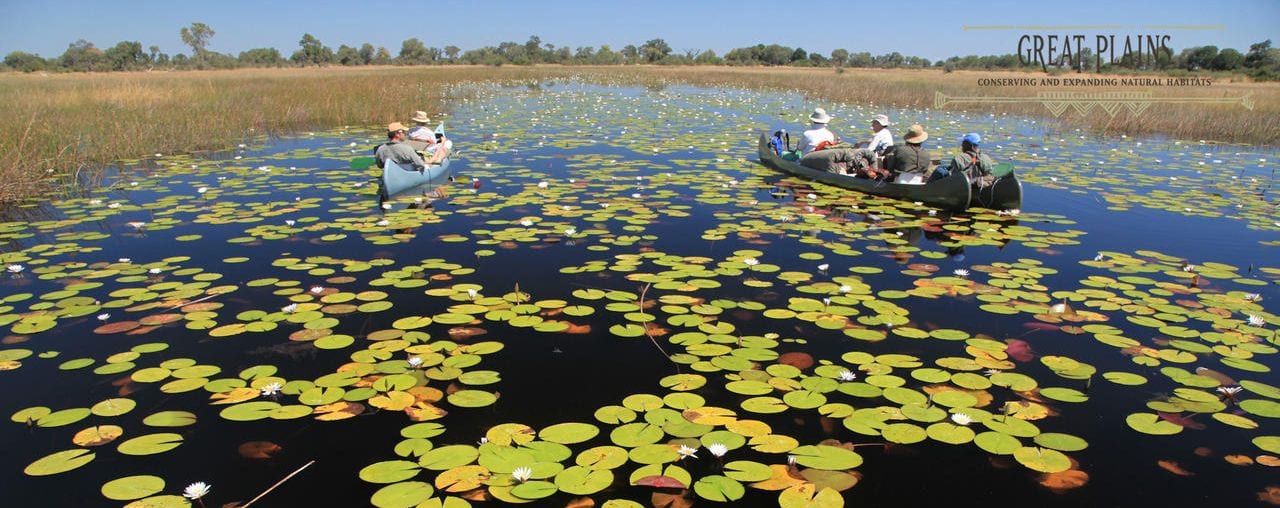
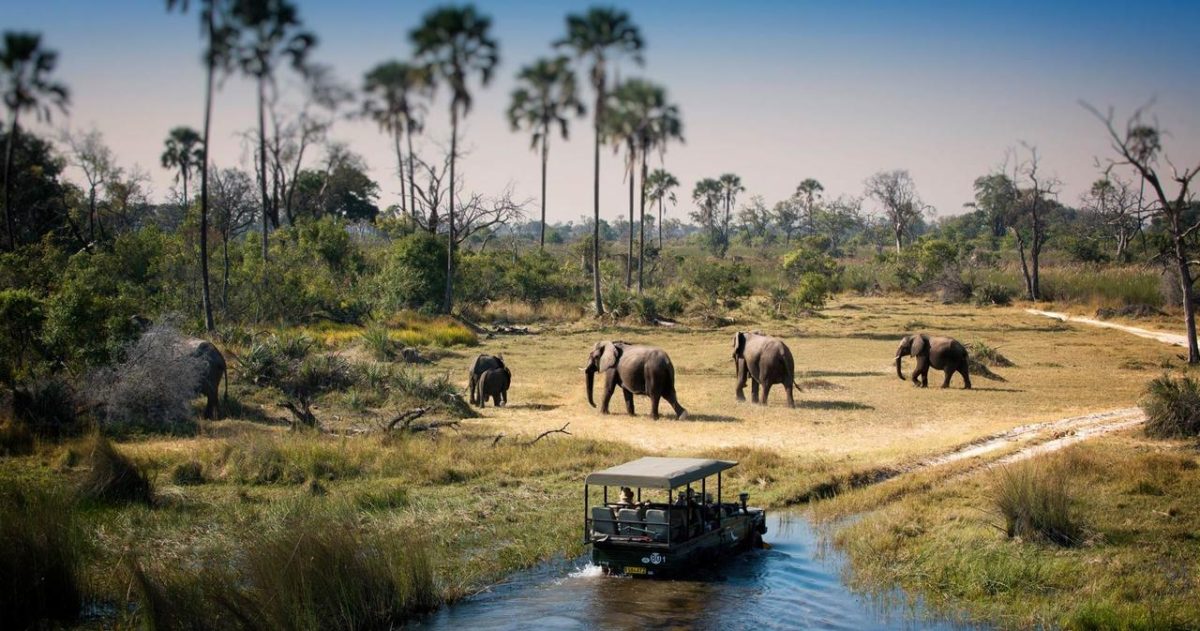
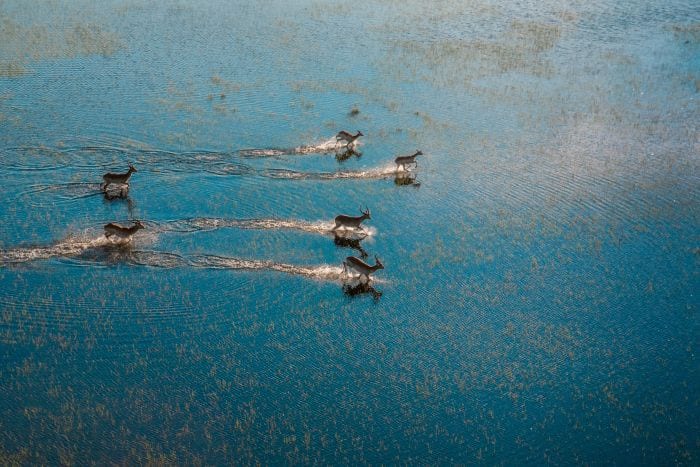
Once across the first fault line, the river fans into multiple channels — most notably the Boro Channel, Maunachira Channel, and Khwai Channel — feeding the vast inland delta. Unlike other river systems, this delta doesn’t flow to the sea. Instead, it spreads into a vast fan-shaped luxuriant wilderness of floodplains, lagoons, forest and rivers, before eventually vanishing into the desert air. This verdant watery paradise in a desert country is naturally the ideal breeding ground for an incredible diversity of wildlife.
What stops it?
When the water meets the final two fault lines, the water is literally dammed and cannot go further. Beyond it lies now lies the dried-up salt pans of the Makgadikgadi and Nxai Pans.
(Before these fault lines emerged, the river flowed through the Okavango Delta, the Makgadikgadi pans and then into the Limpopo River to end in the Indian Ocean)