Antananarivo * Andasibe National Park * Amber Mountain * Ankarana National Park * Ankify * Nosy Be
Discover the remarkable contrasts of eastern and northern Madagascar on this fascinating bush-and-beach safari. From lush rainforests and dramatic limestone formations to the golden beaches of Nosy Be, this safari combines memorable wildlife encounters, striking scenery and coastal relaxation.
Begin in Andasibe National Park, where the haunting calls of indri lemurs echo through the rainforest. Then fly north to explore the beautiful montane forest of Amber Mountain and the extraordinary limestone pinnacles, caves and canyons of Ankarana National Park. Along the way, discover charming Malagasy towns and villages, gaining an insight into local life and culture.
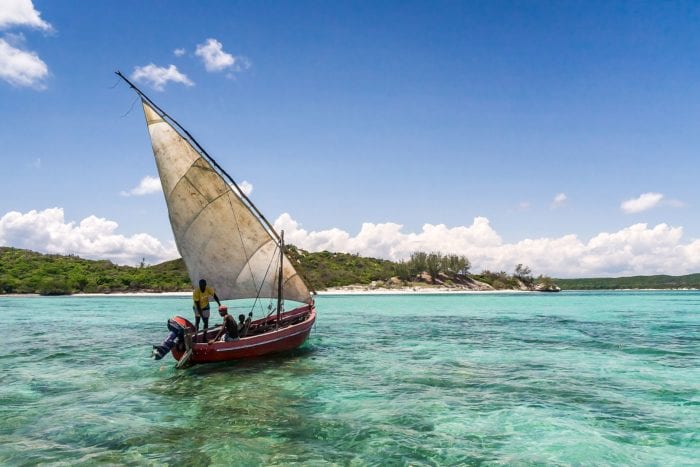
Meander through lush farmland to the coastal village of Ankify before crossing by boat to Nosy Be for five relaxing nights by the sea. Unwind on golden beaches or explore nearby islands such as Nosy Komba and Nosy Tanikely. It’s a wonderful finale to a journey filled with Madagascar’s natural treasures.
Β
Getting Around: This safari combines domestic flights, scenic road transfers and a boat crossing to Nosy Be. Homeward flight schedules may require an additional night in Antananarivo at the end. Alternatively you could opt to end the tour with Andasibe. Chat to us.
Larger Parties: The prices below assume 2 people travelling. The price will be lower if you are a party of 4 people. Contact us for a tailormade quote.
Optional Excursions: From Nosy Be, explore Nosy Komba, snorkel around Nosy Tanikely or discover the lemurs and wildlife of Lokobe Reserve.
Β
This flexible itinerary can be adapted to suit your interests. Extend your time on Nosy Be, add in optional excursions, choose a different beach retreat.
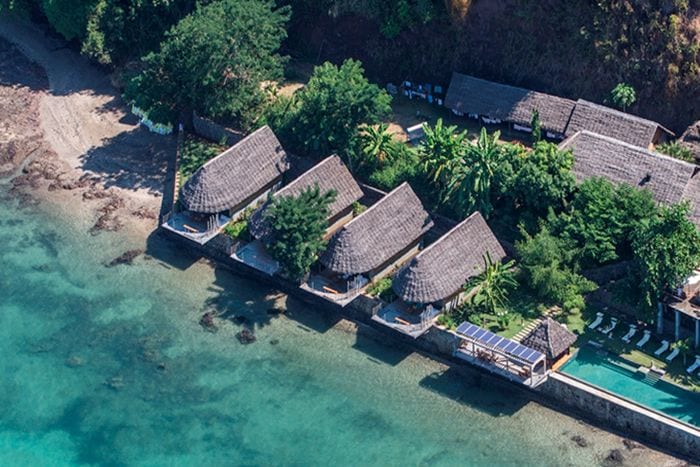
Upgrade option – For a more exclusive experience, consider upgrading to Iharana Bush Camp in Ankarana and the stylish Time & Tide Tsara Komba Lodge, set on the neighbouring island of Nosy Komba.

On arrival at Ivato (Antananarivo) Airport, you are met and transferred to your hotel in Tana.Β On your way you will see rice paddies, and a colourful patch-work of houses. Plus all the daily life in this city of about 2 million inhabitants. Tananarivians mostly live from day to day jobs. This is called βAdy Gasyβ: tires repairing, selling Chinese-made products in the streets, selling scrap.
City Tour β Time Permitting (or enjoy the following morning)
Depending on your flight time, you will start with a tour of the city. We begin in the hills above the city with a visit to Ambohimangat, one of the 12 sacred hills of Tana. This is a World heritage site as classified by UNESCO. This historical place was where the King Andrianampoinimerina started to unify the different kingdoms into one Madagascar. It still holds a strong spiritual significance. People go there with offerings and ask the blessing from the holy king spirit. From the palace you have a panoramic view over Tana. We return to the city where we tour the high, low and middle parts of the city β both in elevation and in wealth.
Antananarivo
Tana, (as the capital city of Madagascar, Antananarivo, is conveniently called) is a brightly coloured mΓ©lange of French colonial architecture, multistoried houses and narrow alleys.
Tana must have been a beautiful city at one time. Today, the city is quite often a shock to first time visitors β throngs of people, buildings in a state of decay, street urchins, hooting and belching old French cars and the lively hustle and bustle of the street markets, all combine to make Antananarivo (Tana) a bit overwhelming at first. But Tana is quite a fascinating city to explore. The city sprawls over several hills with lots of narrow houses, cobblestone streets and stone staircases linking one street to another. Each street seems lined with traders and the array of merchandise on offer in the stalls and markets is in a class of its own. With Malagasy embroidery, semi-precious stones and local crafts all jumbled up together.
You are collected by your guide and drive to the Eastern Rainforests and Andasibe. This scenic transfer takes approx 3-3Β½ hours on a good but winding road with picturesque scenery en route. Along the way there are lovely views of rice paddies and the unique red-bricked houses of the Merina people, the dominant culture in this region.
You have the rest of the day to explore the forests at your own leisure. From late August to March you may be able to join an optional night walk into the park to see the nocturnal lemur species and tenrecs amongst others.
The eastern rainforests ofΒ Andasibe National Park in Madagascar are a must-see on any Madagascar lemur safari. The tropical montane rainforest is one of the densest in the world and its floral diversity is particularly rich. A big part of that attraction is the appeal of the Indri lemurs which have their own special protected part of the Andasibe park.
Today you have a morning expedition to explore the rainforest with the Parkβs specialist guides. You set off early for a walking tour of the Mantadia National Park. Typically this is usually a morning tour of 4-5 hours but there are longer trails on offer. But if you donβt wish to walk so far or long, there are easier trails of two hours.
This is much wilder than the Indri Special Reserve and has a mix of terrain, with some steeper trails, so itβs best if you are reasonably fit. The forest is much thicker and more pristine but you are rewarded with varied wildlife sightings such as the diademed sifaka (the so-called dancing lemur), the black-and-white ruffed lemur, common brown lemur, red-bellied lemur and the grey bamboo lemur.
We recommend taking the very early morning walk into the most accessible part of Andasibe National Park, the Indri Special Reserve to see the lemurs whilst they are most active. The 810ha βreserve within a reserveβ has several well-maintained forest paths, which are mostly gentle in terrain.
The IndriΒ Perinet Special Reserve protects the largest of all the lemurs, the Indri. Standing about a metre high, with a stump for a tail, black-and-white markings and a beguilingly startled expression, the Indri looks more like a bizarre panda than a lemur. You will see them relatively easily, even if you stay on the marked trails, but for longer sightings you must scramble after them through the forest, craning up to exclaim as they execute balletic leaps from tree to tree. Their long back legs are immensely powerful, and an indri can propel itself 10 metres (30ft), executing a turn in mid-air, to grab a new tree and then gaze down benevolently at you!
Walking through the rainforest, as its distinctive siren-like calls emanate from the mist-covered canopy is one of the most memorable experiences of your Madagascar lemur safari. As well as the amazing Indri you may also see the Eastern grey bamboo lemur, red-fronted brown lemur as well as impressive reptiles like Malagasy tree boa and two foot long Parsonβs chameleon. You might even be fortunate to see the giraffe-necked Weevil or the golden Mantilla frog.
After lunch (for your own account), you return to Tana in the afternoon to stay overnight close to the airport
Today you have a road transfer back to Ivato Airport and take the scheduled 2 hour flight from Tana to Diego Suarez in the far north. On arrival, you are transferred to your hotel.
Diego Suarez, or Antsiranana as it is also know, is Madagascarβs fifth largest town. It is the place where the first Europeans landed to the island. Traditionally rated second in beauty after Rio de Janeiro , this imposing bay is encircled by hills, with a conical βPain de sucreβ (sugar loaf) mountain in the middle of one of the bays.
The portβs isolation behind its mountain barrier and its long association with non-Malagasy races has given it an unusually cosmopolitan population. This is the domain of the Antakarana (meaning βthose of the rocksβ) people. They are usually fishermen or cattle grazers whose rulers came from the Sakalava dynasty. Their houses are usually raised on stilts.
Depending on your flight arrival time, you visit the beautiful Three bays of Diego. The Sakalava Bay, the Bay of Pigeons and the Dune Bay will blow your mind. Their long white-sand beaches are wild and almost empty. The calm sea varies in color from green to turquoise. You will have a picnic lunch on site before ending your loop in Ramena fishing village. On your way back to Diego Suarez, you will enjoy the colors of the sunset on the Sugarloaf Mountain. Diegoβs bay is listed among the 10 most beautiful bays in the world.
Today you head 45 minutes south from Diego (40km) passing through Joffreville, a French colonial town with some dilapidated colonial buildings and a relaxed ambience, and then to Amber Mountain.
This montane rainforest on a volcanic massif ranges in altitude from 850m to 1,475m. It has its own micro-climate with a rainfall equal to the eastern rainforests. (So it makes quite a contrast to the dry and sometimes hot Diego Suarez!
It is one of the most visitor-friendly of all the protected areas of Madagascar, with broad walking trails, lush montane forest, picturesque crater lakes, spectacular waterfalls and a comfortable climate (cool and fresh). Its name comes from the amber-coloured resin that oozes from some of its trees and is used medicinally by the local Malagasy people.
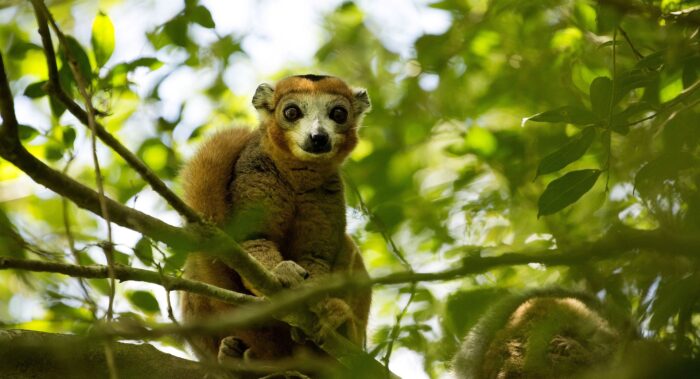
You join a local guide for a lovely walking trail to the Sacred mountain waterfall with numerous giant trees, ferns and species of orchid. Mammals that can be seen here include the Sanfordβs lemur, the crowned lemur, Rufous mouse lemur and the Amber Mountain fork-marked lemur. But you can add leaf-mimic chameleons, leaf-tailed geckos, frogs, butterflies and the very illusive aye-aye to that list.
Birdwatching is also very rewarding in the Amber Mountain National Park. There are some 77 bird species to be found in this reserve including the Madagascar Crested Ibis, and the Malagasy Kingfisher. This area is also known for its many species of orchids.
Today you continue to Ankarana (3-4 hour drive, 145km)
Upgrade: Iharana Bush Camp (DBB)
Today you visit the strikingly different Ankarana National Park for a full day of exploration.
Ankarana National Park
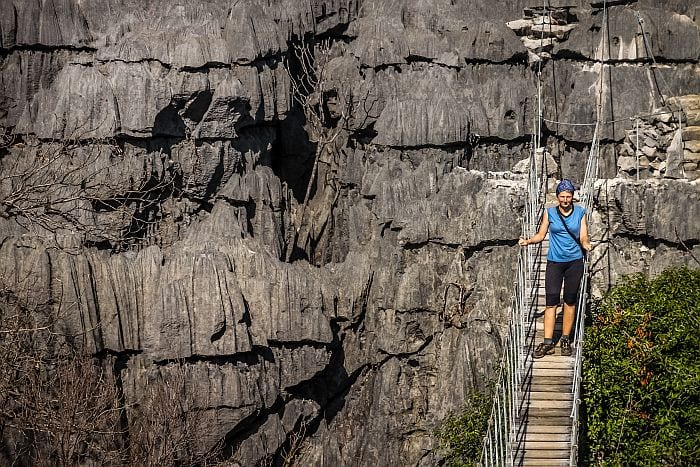
The dry, deciduous Ankarana is a really spectacular, bizarre area of natural beauty. The Ankarana reserve is a limestone massif (plateau) surrounded by formidable cliffs and marvelously impressive fields of razor sharp pinnacles which are called tsingy. These are ancient corals which have been sculptured by erosion.
You explore the park on foot to look for lemurs, chameleons and of course the famous limestone tsingy. Underneath the Tsingy are miles of caves, passages and rivers, where one can find crocodiles and blind fish. Some of the largest caves have collapsed, forming isolated pockets of river-fed forest with their own perfectly protected flora and fauna such as Crowned and Sanfordβs brown lemur as well as the fossa, one of Madagascarβs few carnivores, the striped civet and ring-tailed mongoose.
Thereβs a choice of trails from easy to more challenging. A highlight is the famous heart-raising rope bridge across one of the larger canyons.
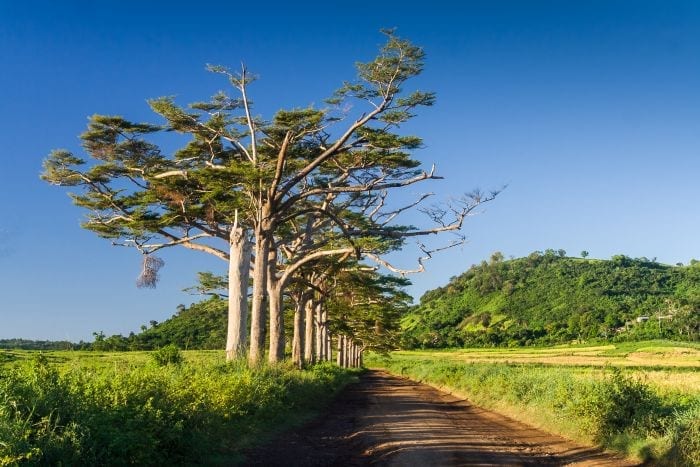
Today you set off after breakfast and continue south. This 3 hour drive is magnificent through the most fertile land of Madagascar. Drive past orchards of mangos and rows of palm trees as well as ylang ylang, vanilla and cocoa plantations. See how local villages cultivate cocoa, spices (vanilla, pepper, bay rose) and perfume plants (ylang ylang and patchouli) on large plantations. We pass Ambilobe with its picturesque market.
You arrive at the small fishing village of Ankify which is also the main harbour access to Nosy Be.
Here you catch an early afternoon boat transfer across to Nosy Be. On arrival you are transferred to your hotel.
Nosy Be is the largest and best known of several beautiful, seductive islands off the north-west coast of Madagascar. This βPerfumed Isleβ, as Nosy Be is known, offers lovely sandy beaches and a lush interior alive with the smells of vanilla, ylang-ylang and coffee. The climate is excellent with warm temperatures throughout the year and brief showers in the rainy summer season which are usually at night.
The shallow beaches of Nosy Be are not ideal for serious swimming or snorkeling as the water stays shallow far out to sea, but all hotels have pools and snorkeling and diving excursions can be made to smaller islands with wonderful coral life such as Nosy Komba and Nosy Tanikely.
Choice of HotelsΒ
This sample tour price is based on LβHeure Hotel in the South-west of the island, a mid-range hotel on a beautiful long beach.Β But there are plenty of other options ranging from Tsara Kombo to Sakatia Lodge.
Upgrade Option: Tsara Komba

You can opt for relaxing on the beach or around the hotel pool or you can take one of the many optional tours such as Nosy Komba & Nosy Tanikely or Lokobe Nature Reserve.
Today you are transferred back to Nosy Be airport for the flight back to Tana. End of Services for price below
Note: You may need to add a final night in Tana. if you want to avoid this, then we can add the Andasibe section at the end of the itinerary which alleviates the need for the final night in Tana.
This is a sample itinerary using specific hotels and lodges. However most of these sample tours can be adapted to suit you. If applicable, it includes domestic seat-in-charter flights. But it excludes any regional and domestic scheduled flights (as these are subject to change and specific routing). These are added to a specific quotation once we have your dates.
All accommodation, meals as specified, domestic flights, English-speaking driver for transfers, tours with park guides in the National Parks (Only official guides are allowed to conduct the walking tours.)
EXCLUDESInternational flights, optional Tana city tour, all services & meals not specified, drinks, visa costs and items of a personal nature eg. tips, curios