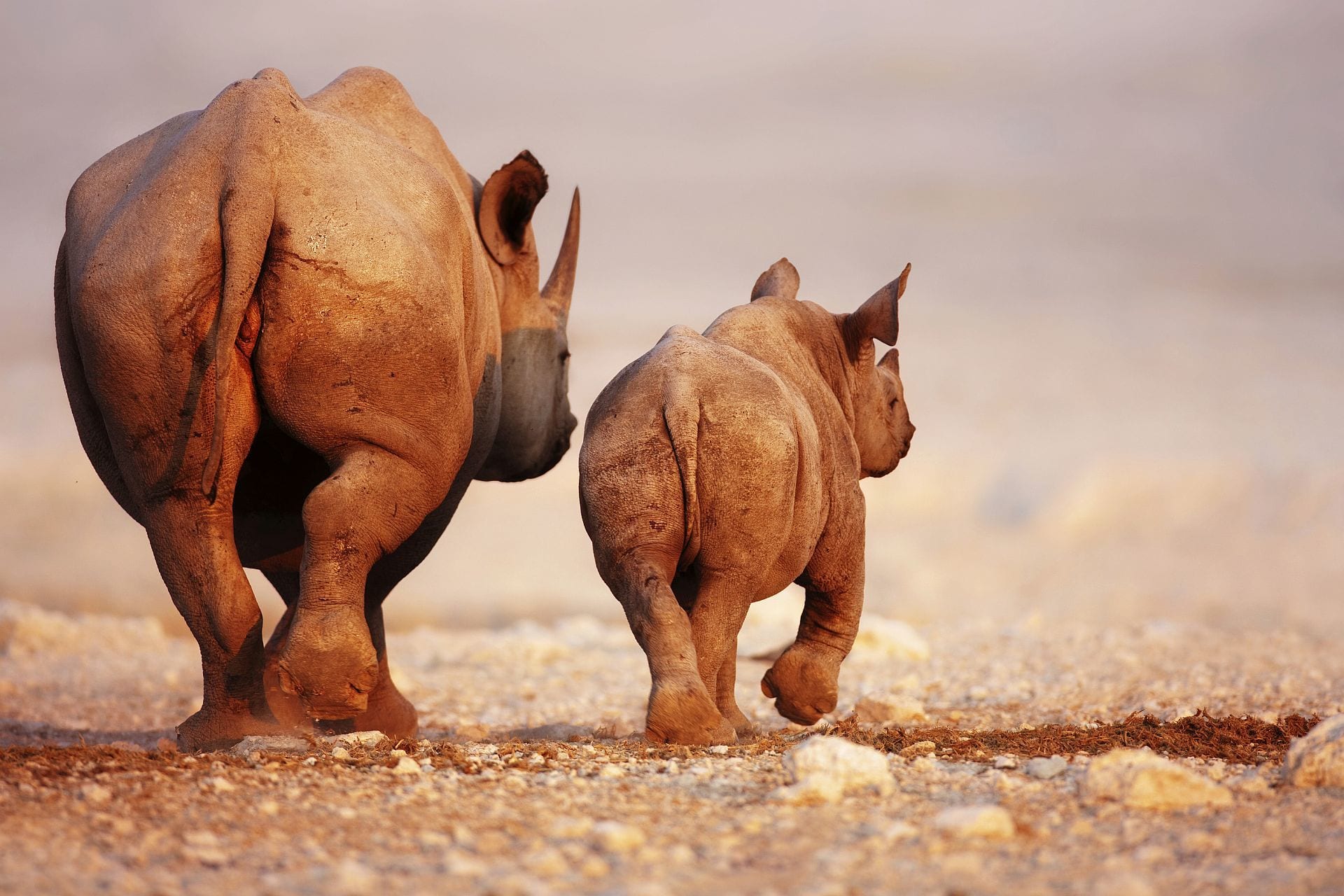
“What do the Norwegians say?” is often the question my family ask when we want to know the weather forecast. For some reason the Norwegian weather website (www.yr.no) seems to be the most reliable in Africa. It is widely used by farmers in Namibia and South Africa. The “Norwegians” said rain was forecast for Damaraland in Namibia where we were staying at Desert Rhino Camp. Not what we were expecting for our rhino tracking expedition. Strange, but very welcome!
On the one hand this is always very good news as the north-west of Namibia (Damaraland and the Koakaveld) suffers from a lack of rainfall at the best of times. At Desert Rhino Camp it had not rained for two whole years. And so the local subsistence farmers and their livestock were taking severe strain. Rain would be welcomed in a way that Europeans will find difficult to imagine.
A second much more minor plus was that it would give us some relief from the sweltering heat. This had characterized our trip so far with temperatures of over 40 C not uncommon.
However Festus, our guide, explained that this area always experienced a power struggle between the rain – which predominantly comes from the east. And the afternoon winds from the west. The winds usually won the tug-of-war. It blows the rain back resulting in the arid desert landscape of the Damaraland, the Skeleton Coast and the Kaokoveld. (Just over the border in Angola, the absence of this west wind has led to a tropical climate along the same coastal strip. A huge contrast to Northern Namibia.)

Arrival at Desert Rhino Camp
So as we arrived at Desert Rhino Camp in the stark but beautiful Palmwag concession. The looming rain clouds made a wonderful photographic backdrop to our wildlife shots but the westerly winds kept them at bay. That afternoon we enjoyed a nature drive to appreciate the panoramic vistas but it was rapidly renamed a game drive. We were incredibly fortunate to see some of the very rare desert-adapted lions. As well as giraffe, gemsbok, zebra and desert-adapted elephant. All were looking remarkably healthy considering the drought. This is because some of them have adapted to eat a broader variety of plant material. The healthy population numbers meant plenty of food for the lions.
Rhino Tracking in the Desert
The following day was to be taken up with tracking desert rhino on foot and by vehicle. This is the big draw card of this camp. This is offered in conjunction with the Save the Rhino Trust which provides the trackers and in turn shares in the proceeds from the camp. However the Norwegians were right. Almost. They had predicted a small quantity of rain. Just enough to cool the earth and provide a little relief but not enough to scupper our chances of tracking the rhino.
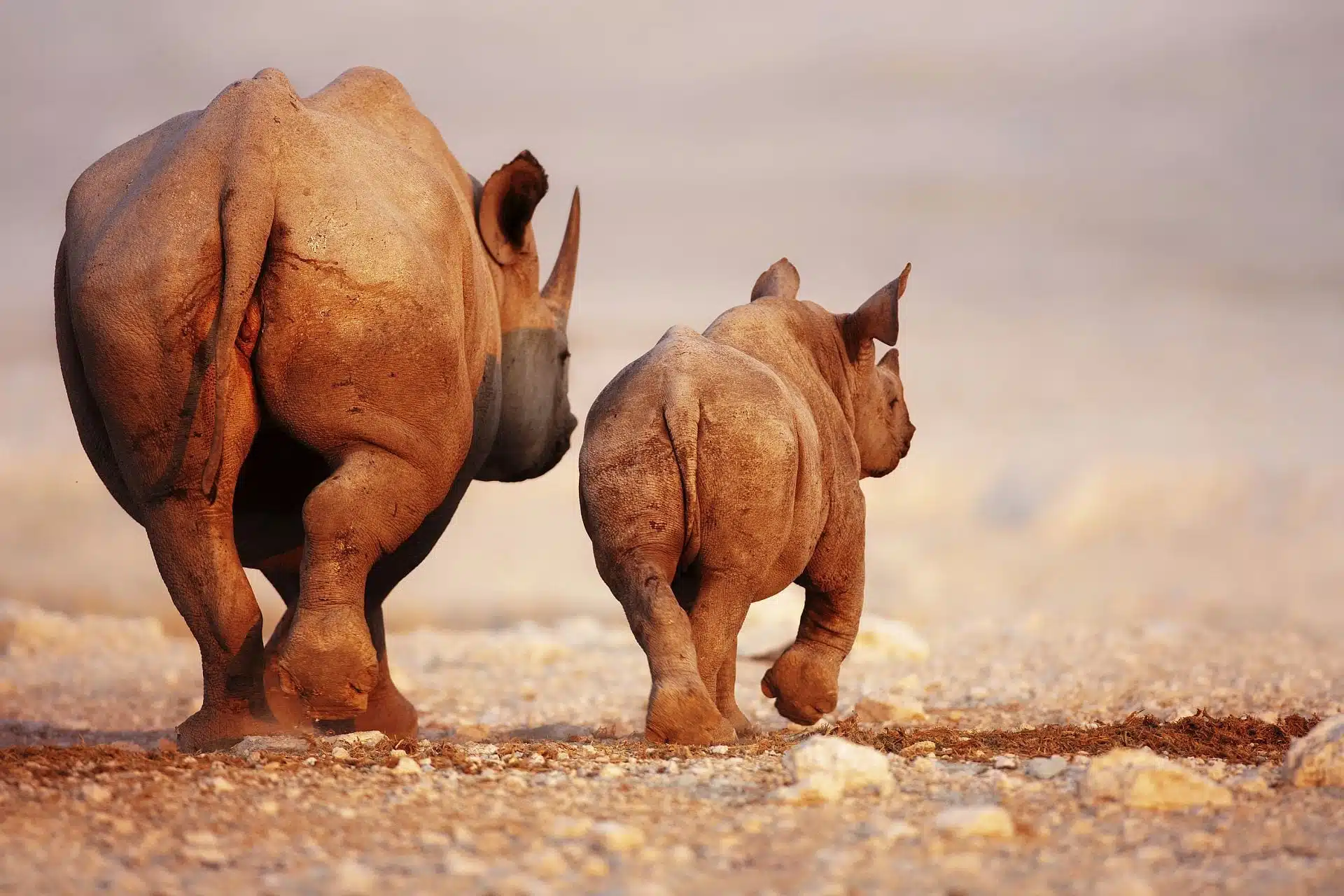
Mother Nature had other ideas. From the night before there was thunder and lighting with constant rain from 2am. Slmost unheard of in this part of the world where rain for more than one hour is a rarity. After a very early breakfast, we set off at 6am but the rain set in – hard. By late morning we, and the trackers, had to admit defeat and retreat back to the warmth of the camp. We had become some of the very few people who DON’T manage to see the western black rhino at Desert Rhino Camp. 95% of people do see them which is almost a guarantee in the dry season.
The Good News
The good news is that the rain continued all day and into the following morning. No good for our safari activities but we didn’t begrudge the Namibians their much needed break of the two year long drought. After such rains, it takes just 7 days before the mountains of this eerily stark landscape are covered in grass. This ‘7 day grass’ as its is known will last all summer until April when it is replaced by the perennial winter grasses. Outside of the concession areas, the local people’s cattle will have a plentiful supply of food for the next year.
We had also been extremely lucky to spot the desert lion and so this provided some compensation.