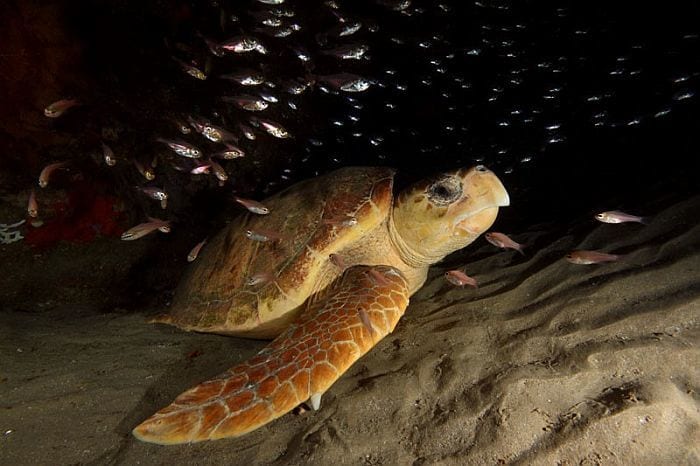
One of the most magical experiences along Southern Africa’s coast is witnessing sea turtles nesting or hatching. Between November and March, these ancient mariners return to the very beaches where they themselves once hatched. They are guided by instincts and navigational skills that still baffle scientists. It is one of those remarkable poignant mysteries of nature.
Around November, as the sun sets and the tide rises, female turtles emerge from the surf, hauling themselves up the sand in the soft darkness to dig their nests. They lay up to a hundred eggs at a time, bury them carefully, and slip silently back into the ocean.
Weeks later, under the same stars, tiny hatchlings fight their way to freedom. This is a perilous sprint from sand to sea, dodging crabs, sea birds and other potential predators along the way. Only a few will survive to adulthood, perhaps returning decades later to repeat the cycle.
It’s a humbling reminder of just how precious – and fragile – these wild coastlines are.


The Turtle Season
The turtle-tracking season runs from November through February, occasionally into March.
- November to December: Nesting season when the adult females lay their eggs
- Mid-January to February: Hatching season when baby turtles race for the ocean
Because turtles only venture ashore under cover of darkness and high tide, turtle tracking is a night-time adventure, with timing dependent on the tides. (The turtles need the safety of darkness to find a suitable nesting place above the high tide mark.) So, some excursions depart just after sunset, whilst others might begin after midnight. It just depends on how your dates coincide with the tides.
Chat to us
Few wildlife encounters rival watching a turtle return to the very beach where it was born. We'd love to help you experience it for yourself.
Plan your Trip with Cedarberg AfricaWhere to Go: KwaZulu-Natal & Southern Mozambique
The best place to be to witness the incredible experiences is the northern coast of KwaZulu Natal in South Africa or Southern Mozambique. These beaches form part of a continuous marine ecosystem which is warm, protected, and still remarkably unspoilt.
Two species nest here:
- Loggerhead Turtles (Caretta caretta): smaller, reddish-brown shells; the more common species.
- Leatherback Turtles (Dermochelys coriacea): enormous, prehistoric-looking giants — sometimes over two metres long and weighing up to 700 kg. They are critically endangered, and their survival depends heavily on the protection of these few resting sites
So how do the different lodges offer this unique experience? The lodges differ quite a bit in their approach to turtle tracking. So, if turtle tracking is a big attraction for you, take note…
Turtle Tracking at Thonga Beach Lodge
At Thonga Beach Lodge in northern KwaZulu-Natal, turtle tracking is a highlight of summer. The lodge holds a special South African Parks permit allowing guided 4×4 drives along the beach at high tide. This is a huge advantage, since you can cover more ground in search of nesting turtles.
Guides are trained to spot the faint glimmer of movement in the moonlight, switching off engines to approach quietly and avoid disturbing the animals. The experience lasts several hours and is available at an additional cost, with excursions limited in terms of numbers – to protect both the turtles and the dunes.
Guests often describe it as one of the most moving wildlife moments of their travels, more intimate and emotional than any game drive.
There is a chance that you may not be successful. But generally the turtles are spotted, sometimes only 15 mins into the excursion and sometimes much later.