Cape Leopard Trust
Protecting the elusive leopards
of the Cape mountains

The Cederberg is a landscape of sandstone mountains, fynbos, open sky and hidden wildlife, north of Cape Town. It is also home to one of South Africa’s most elusive predators: the Cape Mountain leopard.
Because Cedarberg Africa was born in this region, the work of the Cape Leopard Trust feels especially close to us. Their research and conservation work takes place in the mountains and farmlands around us, the landscapes that gave our company its name.
Why leopards matter
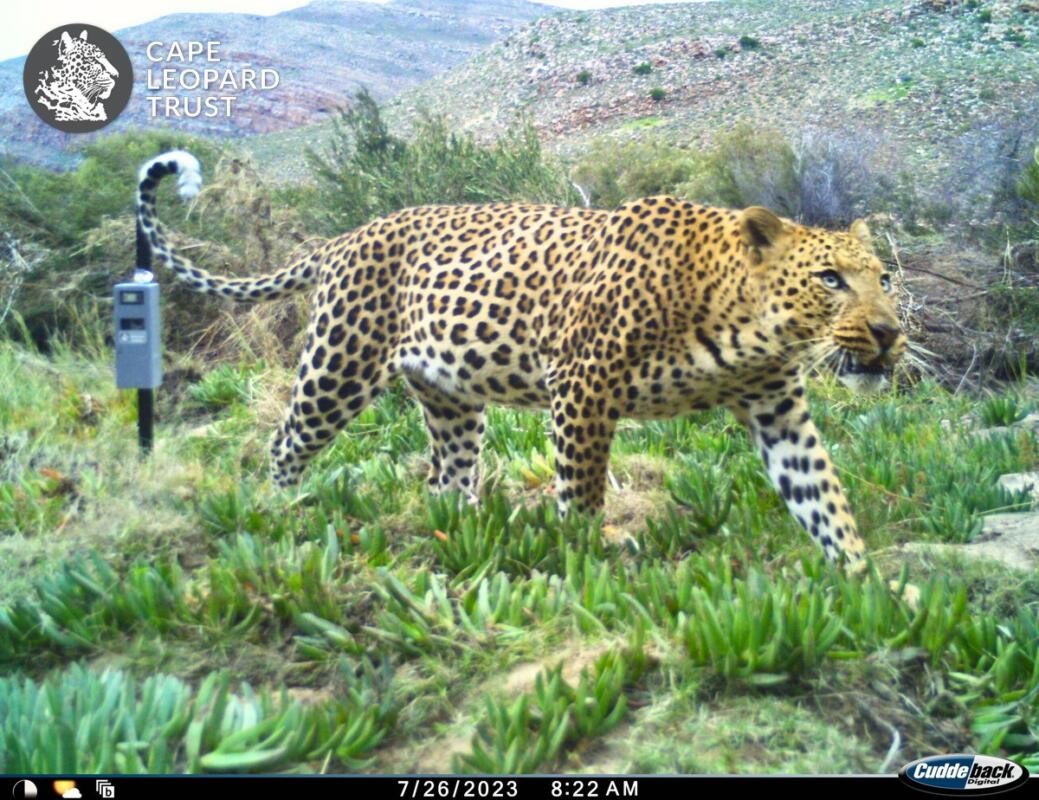
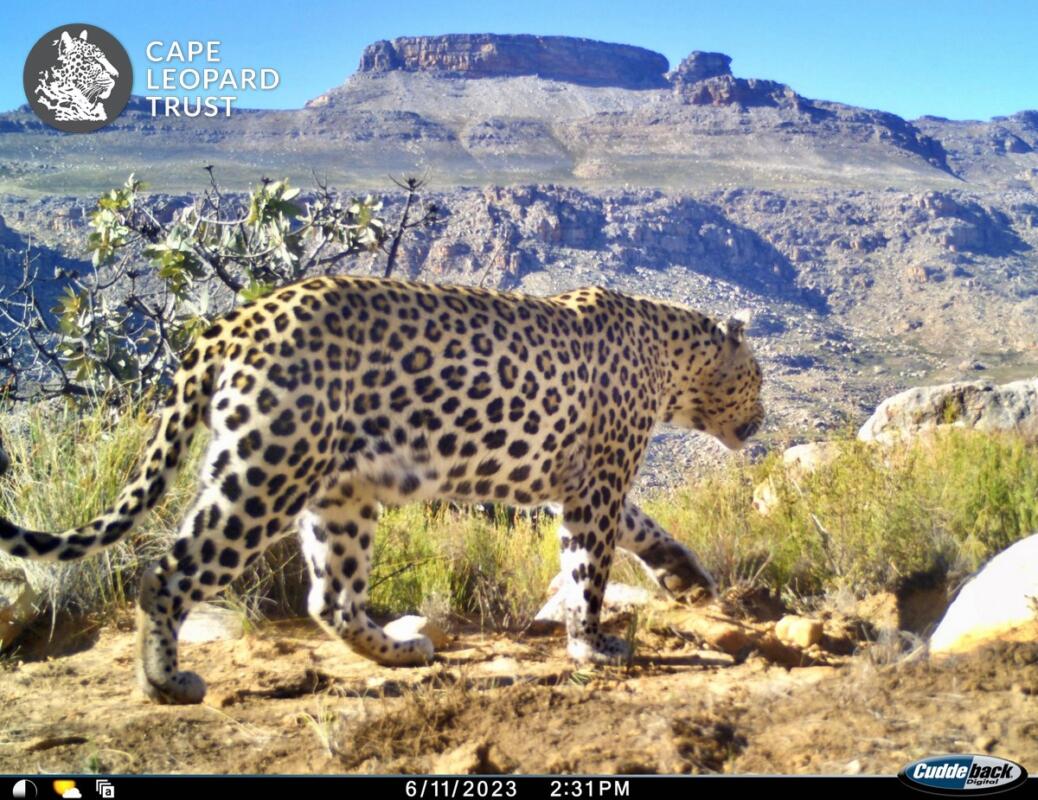
Leopards are the last remaining large predator still roaming freely in much of the Western Cape. They are rarely seen, mostly active at night, and range over vast areas.
In the Cape mountains, leopards face many pressures. Habitat loss, shrinking prey numbers, roads, snares and conflict with people all threaten their long-term survival. They live at low densities and require large, connected landscapes in order to thrive.
Protecting leopards therefore means protecting far more than one species. It means protecting mountain catchments, fynbos, smaller wildlife, and the wild character of the Cape landscapes.
What the Cape Leopard Trust Does
The Cape Leopard Trust is a non-profit conservation. Its work combines scientific research, practical conservation and environmental education.
The Trust (CLT) studies leopard movement, behaviour and habitat use through camera traps, field research and long-term monitoring. This research helps build a clearer picture of where leopards live, how they move through the landscape, and what they need to survive. The organisation also works with landowners, communities and conservation partners to reduce predator-farm animal conflict and encourage coexistence between people and predators
Why we support them
For us, supporting the Cape Leopard Trust is a way to give back to the wild landscapes around our home. The Cederberg is not only a beautiful place to visit. It is a living ecosystem, and its wildlife needs long-term protection.
We also like the Trust’s balanced approach. Their work is grounded in science, but also in education and practical collaboration with people who live and work alongside wildlife.
That feels very much in keeping with Cedarberg Africa’s own view of responsible travel: conservation works best when local people are part of the solution.