Antananarivo * Β Kirindy Forest Reserve * Tsingy de Bemaraha National Park * Β Avenue de Baobabs * Morondava * Tana * Andasibe
Venture into Madagascar’s wild west, where extraordinary limestone formations, ancient baobabs and rare wildlife make for a truly memorable adventure.
This adventurous Madagascar safari takes you well beyond the usual tourist trails, into some of the island’s most remote and spectacular landscapes. Discover the extraordinary limestone pinnacles of Tsingy de Bemaraha, explore the dry forests of Kirindy and marvel at the towering baobabs of western Madagascar. Then head east to the lush rainforests of Andasibe for a completely different wildlife experience.
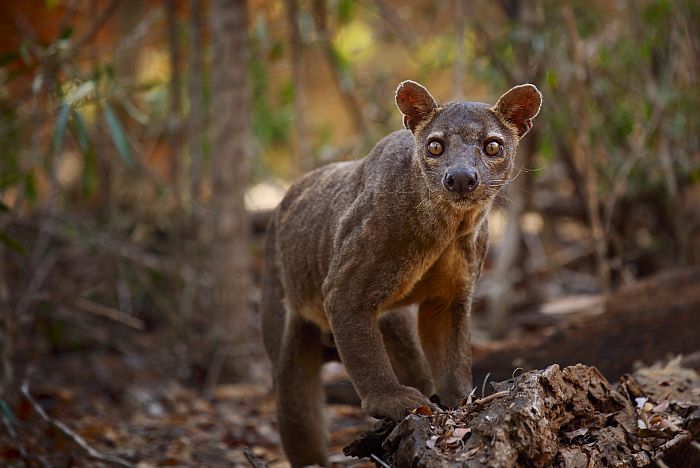
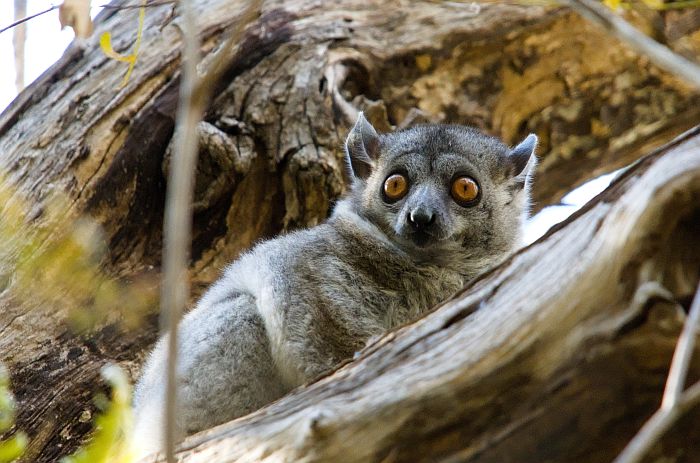
Madagascar’s remarkable biodiversity is closely linked to its varied landscapes and habitats. By combining the dry deciduous forests of the west with the tropical rainforests of the east, this itinerary offers a fascinating introduction to the island’s extraordinary endemic wildlife. Look out for lemurs, unusual reptiles and colourful birdlife, along with the remarkable plant species found nowhere else on Earth.
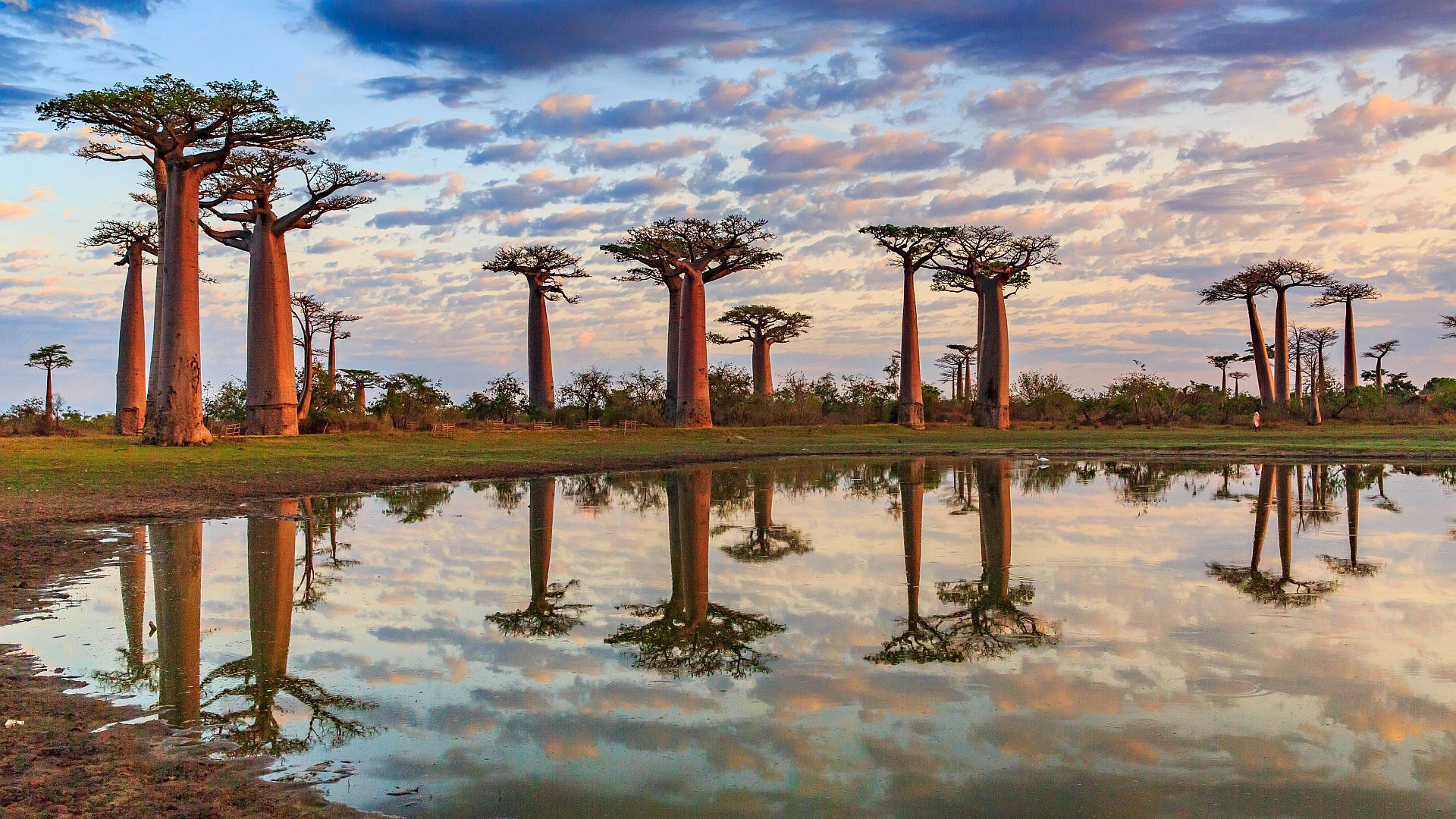
The western highlights are truly special. At Tsingy de Bemaraha, a dramatic labyrinth of jagged limestone formations creates one of Madagascar’s most astonishing landscapes. Nearby, Kirindy Forest offers the chance to discover wildlife adapted to a much drier environment. And few sights are as evocative as the magnificent baobabs rising above the landscape near Morondava, particularly in the soft light of late afternoon.
Your journey ends in the eastern rainforests of Andasibe, where the haunting calls of indri lemurs echo through the forest canopy. It’s a wonderful contrast to the arid landscapes of the west.
However this tour is not for the faint-hearted. It’s a safari for travellers with a genuine spirit of adventure. Reaching these remote places involves some long drives on rough roads, while exploring the Tsingy requires reasonable fitness and confidence walking over rocky, uneven terrain. But for those happy to embrace the journey, the rewards are exceptional.
If the longer overland journeys don’t appeal, you can still experience the magic of Madagascar’s famous baobabs.
We can add a shorter visit to Morondava and the Avenue of the Baobabs to many of our other Madagascar itineraries. Allow two nights in Morondava, plus an additional night in Antananarivo for flight connections. You’ll be able to visit the Kirindy Forest Reserve as well.
For a more extensive exploration, consider combining western Madagascar with our Rainforests, Mountains and Beaches of Southern Madagascar tour.
From Morondava on Day 6, travel inland towards Antsirabe before continuing south through the scenic Highlands to the south-west coast. This brings together wonderfully contrasting regions and offers a broader picture of Madagascar’s landscapes and wildlife. Allow approximately 13 to 14 nights for this itinerary.
Adventure level: This is an active journey, best suited to reasonably fit travellers who enjoy exploring remote destinations. Some walking at Tsingy de Bemaraha is demanding, with rocky and uneven terrain.
Road journeys: Expect a couple of long driving days, sometimes over rough and challenging roads. A flexible attitude and a sense of adventure are essential.
Seasonality: Access to Tsingy de Bemaraha is seasonal and dependent on road conditions. We’ll advise on suitable travel dates and the most practical routing.
Pricing: Our indicative pricing assumes two people travelling together. For groups of four or more, the cost per person can be considerably lower, as private transport and guiding costs are shared.
There are several ways to adapt this adventure to suit your time, interests and preferred pace.
Allow more time at Tsingy de Bemaraha – We recommend an additional night at Tsingy de Bemaraha if you’re keen to explore both the Grand Tsingy and Petit Tsingy. This allows more time to appreciate the extraordinary landscape without feeling rushed.
For a more leisurely version of the main itinerary, why not add a night at Tsingy de Bemaraha and another in Morondava? This gives you more time to explore and enjoy a little relaxation between the more adventurous sections.
Contact our Madagascar experts to discuss your ideal adventure

On arrival at Ivato (Antananarivo) Airport, you are met and transferred to your hotel. On your way you will see rice paddies, and a colourful patch-work of houses, and the daily life in this city of about 2 million inhabitants. Tananarivians mostly live from day to day jobs. This is called βAdy Gasyβ: tires repairing, selling Chinese-made products in the streets, selling scrap.
City Tour β Time Permitting
Depending on your flight time, you will start with a tour of the city. We begin in the hills above the city with a visit to Ambohimangat, one of the 12 sacred hills of Tana. This is a World heritage site as classified Unesco. This historical place was where the King Andrianampoinimerina started to unify the different kingdoms into one Madagascar. It still holds a strong spiritual significance. People go there with offerings and ask the blessing from the holy king spirit.Β From the palace you have a panoramic view over Tana. We return to the city where we tour for high, low and middle parts of the city β both in elevation and in wealth.
Antananarivo
Tana, (as the capital city of Madagascar is conveniently called), is a brightly coloured mΓ©lange of French colonial architecture, multistoried houses and narrow alleys. Antananarivo sprawls over the rolling central highlands of Madagascar surrounded by fields of rice paddies. A city with unique architecture, oodles of charm and bustling streets, Tana must have been a beautiful city at one time. Today, the city is quite often a shock to first time visitors β throngs of people, buildings in a state of decay, houses packed one upon the other, street urchins, hooting and belching old French cars and the lively hustle and bustle of the street markets, all combine to make Antananarivo (Tana) a bit overwhelming at first.
But Tana is quite a fascinating city to explore. The city sprawls over several hills with lots of narrow houses, narrow cobblestone streets and stone staircases linking one street to another. Each street seems lined with traders and the array of merchandise on offer in the stalls and markets is in a class of its own β with Malagasy embroidery, semi-precious stones and local crafts all jumbled up together.
Royal Palissandre Hotel
The attractive 4 star Royal Palissandre Hotel is one of the more modern of the Tana hotels and is one of our favourites. It has a pleasant hillside setting overlooking the βCity of Thousandsβ. It is an attractive building with rose-coloured brickwork, Mantasoa stonework, and much use of rosewood and marble in the interior.Β There are 46 are simply furnished but well-appointed rooms. All have air conditioning, polished wooden floors, safe, minibar, TV, Wi-Fi, telephone and full bathroom with bath and shower.
Today you return to Ivato Airport for your scheduled flight to Morondava. On arrival you are met and transferred to your beachside hotel. The rest of the day is at leisure.
Today you head north to Relais du Kirindy. The Western part of Madagascar is the driest, known for both its magnificent baobab trees and its dry western forest. So along the way, weβll do some baobabsβ excursions to visit the sacred baobabs, and the famous baobabs alley.
Alley of BaobabsΒ βΒ Just before Morondava, we stop at the Alley of Baobabs for sunset photos. These huge trees, several hundred years old, will reveal their beauty and size with the red colours of dusk. This is one of the most popular spots in Madagascar. These baobabs can be up to 800 years old and be 98 feet high (30 m). The diameter of the largest trees can reach up to 36 feet (11 m).
You continue to Kirindy Forest Reserve where you enjoy an afternoon nature hike to see some of the wildlife and flora.
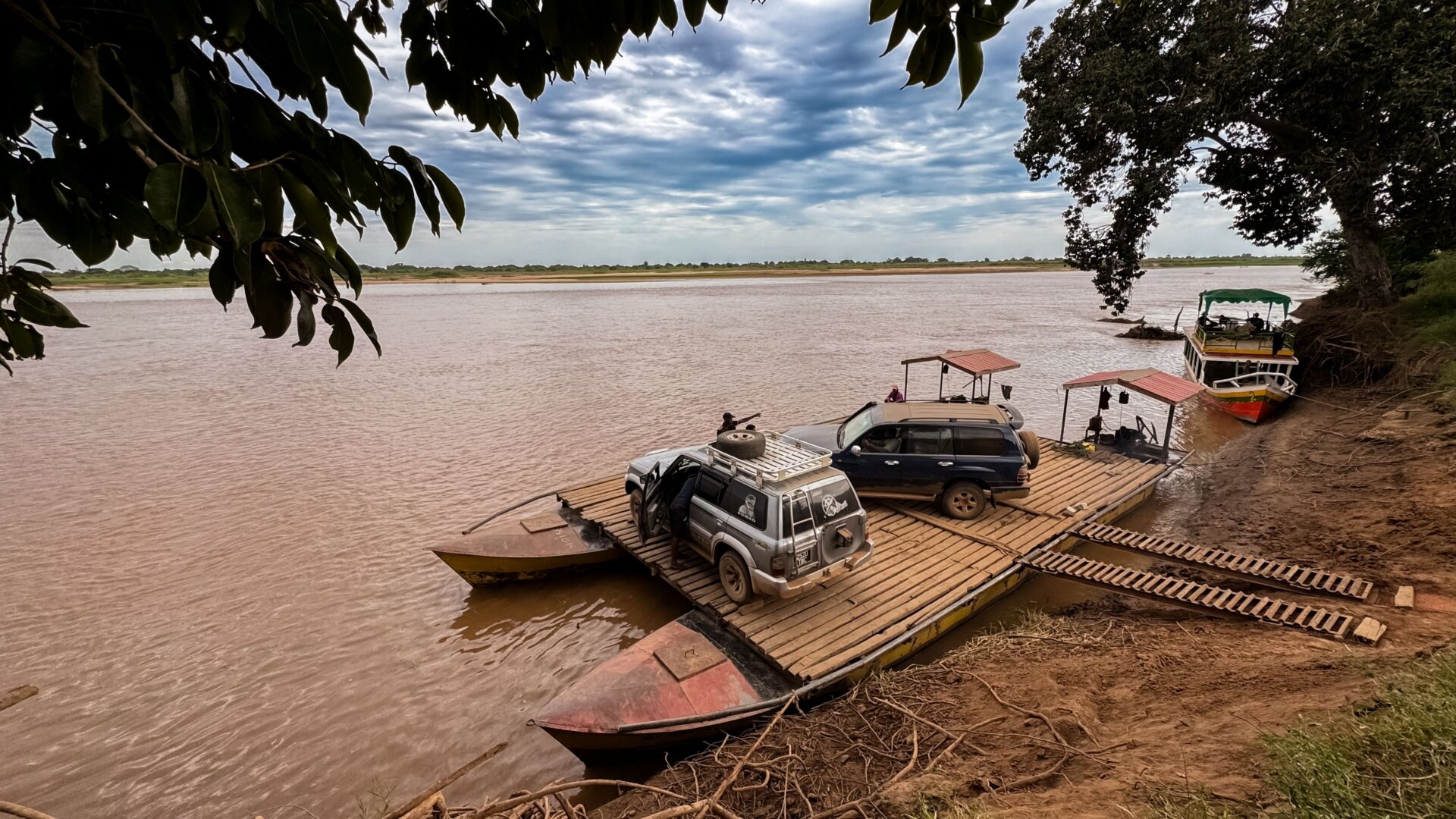
Optional early morning visit to Kirindy Forest Lodge before your long drive north brings us to the real Madagascar. You can experience the real life of Malagasy people in the driest part of the country. On your way, you will enjoy crossing the Manambolo River where your driver will load the car on a barge. You arrive in Belopaka in the late afternoon.
Note: If you have time, we strongly recommend a third night here if possible.
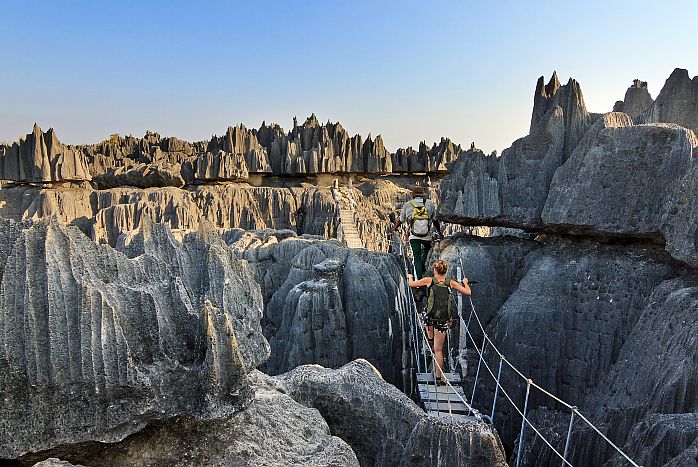
After breakfast, you enjoy a hike in the limestone reserve of βTsingy de Bemarahaβ. This is classified as a World Heritage site as well.Β This massif is spectacularly eroded into a chaos of karsts pinnacles which gives it a unique form β wild and sharp limestone pinnacles. The scenery rivals anything in Madagascar and itβs a treasure house for botanists.
These limestone pinnacles were built by the slow sedimentation of coral and shells. When Madagascar separated from Africa 165 million years ago, the ocean withdrew and the tsingy remained.Β This strange stone forest of serrated βtsingyβ is a 100 meters tall in places. Under the tsingy, there are undiscovered caves, rivers, and canyons. Bats, lemurs, birds and endemic flora have adapted to this unique ecosystem.
The flora consists of a dry western deciduous forest as well as the typical plants of these dry limestone areas, such as aloes, baobabs and the red-flowered flamboyant tree which is so widely planted in the tropics. We can also see plants which grow between the stone such as different species of pachypodium and orchids.
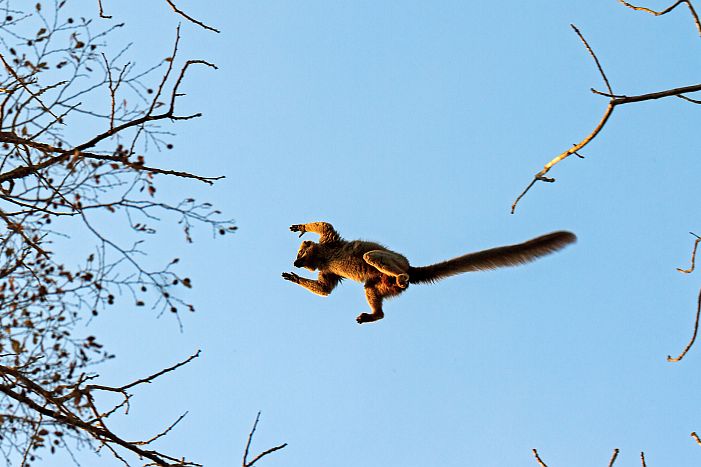
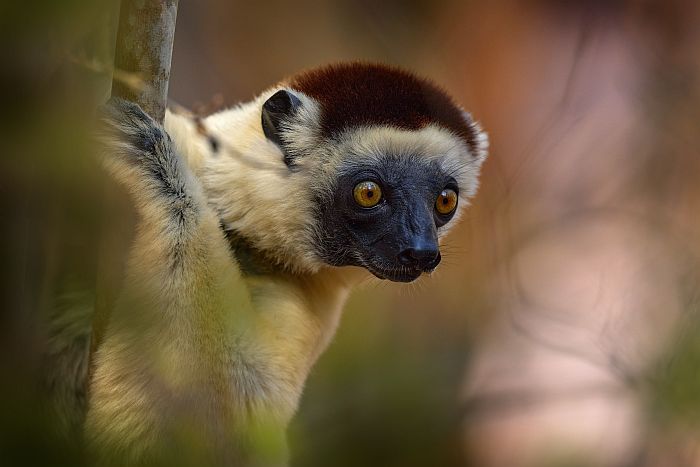
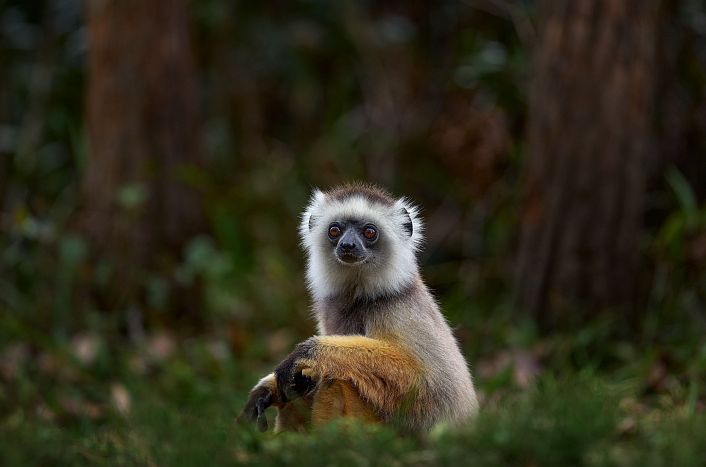
As far as wildlife goes, we can see the stump-tailed chameleon Brookesia perarmata known from only a handful of specimens. The bird list contains 53 species. The 7 species of lemurs include Deckenβs sifaka or Propithecus verreaux. These are also known as the dancing lemurs.
Note: You can choose how much you want to hike. There is the βgrand tsingyβ hike of approx 4 to 5 hours. Or the βpetit tsingyβ visit which is a shorter 2 hour visit starting close to the village with less walking. If you are keen on hiking, then why not add a third night so that you can do both hikes.
In the afternoon, you can take a guided pirogue tour (wooden canoe) along the Manambolo River to visit the Vazimba tombs.
Today you will leave this rocky paradise and embark on an 8-9 hour long journey back in the southern direction along the western coast of the island.Β Just before arriving in Morondava youβll pass by the famous Baobab Alley, but this time at sunset.
After getting that classic βbaobabs in the sunsetβ photo, the drive continues after dark down the coast to Morondava. Arrival time depends on time of year β and when the sun sets β but could be as late as 7pm.
Morning at leisure to discover Morondava.
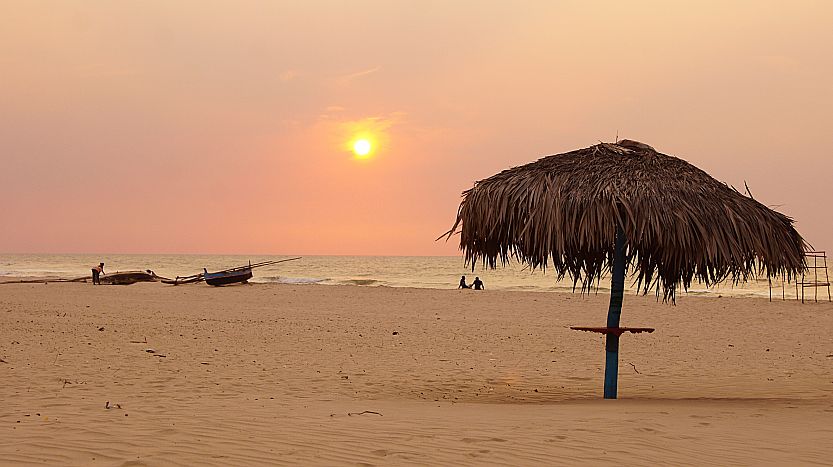
Morondava is actually a seaside resort on the beach facing the Mozambique Channel. The Morondava area was the centre of the Sakalava kingdom, a prosperous rice-growing area. It has a resort atmosphere β a laid-back vibe where many different cultures and religions manage to intermingle which makes it very special. And somewhat unusual in Madagascar. You can easily walk around the town and, visit the colorful market and the naval carpentry workshop.
You are transferred to the airport for your flight back to Tana for a second overnight stay.
Note: Flight schedules change regularly in Madagascar. Plus the Morondava to Tana flight is usually in the early afternoon hence the need for another overnight stay.
After breakfast, you head east to Andasibe. This brings us to the humid part of the country with many primary forest and lakes. After some stops along the way we arrive in time for lunch (own account). This evening you may enjoy an optional night expedition.
The eastern rainforests of Madagascar are a must-see on any Madagascar lemur safari. The tropical montane rainforest of Madagascar is one of the densest in the world and its floral diversity is particularly rich. A big part of that attraction is the appeal of the Indri lemurs which have their own special protected part of the Andasibe Park.
Optional Night Walk
If you travel in spring or summer (late August to March), pack a head torch as you can join a night stroll to see nocturnal wildlife such as tenrecs (spiny hedgehog like creatures) with the Perinet guides. At night another world emerges in the forest, making night walks especially interesting. Nocturnal lemurs include the Eastern woolly lemur, Goodmanβs mouse lemur and the furry-eared dwarf lemur.
Vakona Forest Lodge
The lovely Vakona Forest Lodge lies 8 kilometres from Andasibe (PΓ©rinet), between Andasibe and the Mantadia National Park. The building has been designed around an octagonal reception area (common in Malagasy architecture) with a lounge, bar and restaurant with a huge fireplace in the middle to keep the airy space warm in winter. Thereβs also a small library. Outside you can relax on the veranda overlooking the forest and lake or around the large central swimming pool.
Today you have a morning expedition to explore the rainforest with the Parkβs specialist guides.
Important Note:Β Depending on your interests and your final days flight time, we may visit the Special Indri Indri Reserve today in the morning, and then Mantadia in the afternoon.Β ButΒ if you have time, we visit Mantadia today and then the Special Indri Indri reserve on the final morning.
You set off early for a walking tour of the Mantadia National Park. Typically this is usually a morning tour of 4-5 hours. But if you donβt wish to walk so far or long, there are easier trails of two hours or so.
This is much wilder than the Indri Special Reserve (seen tomorrow) and has a mix of terrain, with some steeper trails, so itβs best if you are reasonably fit. (However there are also some shorter and easier trails on offer if you prefer.)
The 810ha forest reserve is much thicker and more pristine but you are rewarded with varied wildlife sightings such as the diademed sifaka (the so-called dancing lemur), the black-and-white ruffed lemur, common brown lemur, red-bellied lemur and the grey bamboo lemur. Birding in Mantadia is especially good with the likes of the rare Brown mesite, Pitta-like ground-roller, Brown emutail and the velvet asity all to be seen. (Your chances of good birding increases on the longer trails.)
In the afternoon you may like to visit the private reserve of Vakona where you can play with the (extremely) with habituated black & white lemurs and brown lemurs which are very relaxed, jumping onto your shoulders without the slightest hesitation.. This is mainly a photographic opportunity but most people enjoy getting a photo with a lemur!
This morning you take an early morning walk into the most accessible part of Andasibe National Park, the Indri Special Reserve to see the lemurs whilst they are most active. The 810ha βreserve within a reserveβ has several well-maintained forest paths, which are mostly gentle in terrain.
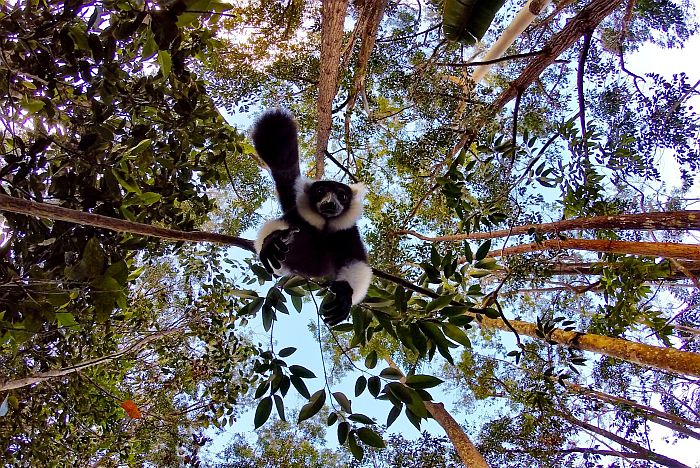
The Indri or Perinet Special Reserve protects the largest of all the lemurs, the Indri. Standing about a metre high, with a stump for a tail, black-and-white markings and a beguilingly startled expression, the Indri looks more like a bizarre panda than a lemur. You will see them relatively easily, even if you stay on the marked trails, but for longer sightings you must scramble after them through the forest, craning up to exclaim as they execute balletic leaps from tree to tree. Their long back legs are immensely powerful, and an indri can propel itself 10 metres (30ft), executing a turn in mid-air, to grab a new tree and then gaze down benevolently at you!
Typically you visit Indri Special Reserve at dawn to see the Indri lemurs when they are most active. Walking through the rainforest, as its distinctive siren-like calls emanate from the mist-covered canopy is one of the most memorable experiences of your Madagascar lemur safari. As well as the amazing Indri you may also see the Eastern grey bamboo lemur, red-fronted brown lemur as well as impressive reptiles like Malagasy tree boa and two foot long Parsonβs chameleon. You might even be fortunate to see the giraffe-necked Weevil or the golden Mantilla frog.
Afterwards you return to Tana in time for your international flight.
Note: The order and number of park visits will depend on the timing of your international flight.
This is a sample itinerary using specific hotels and lodges. However most of these sample tours can be adapted to suit you. If applicable, it includes domestic seat-in-charter flights. But it excludes any regional and domestic scheduled flights (as these are subject to change and specific routing). These are added to a specific quotation once we have your dates.
All accommodation, meals as specified (mix of BB, DBB), domestic flight to and from Antananarivo to Morondava, English-speaking driver for transfers, tours with park guides in the National Parks (Only official guides are allowed to conduct the walking tours.)
EXCLUDESInternational flights, optional Tana city tour, all services & meals not specified, drinks, visa costs and items of a personal nature eg. tips, curios