A Day on Safari in Africa: What It’s Really Like
Africa is quite unlike any other place on earth: the stillness, the songs, the smell of the bush and the myriad colours.
There’s nothing to compare with the thundering footsteps of migrating wildebeest, or the thrill of a night drive following the chase of a hungry lion. Getting so close you can see the hair on its back rise.
Many people ask us: “What’s it actually like to be on safari?” And how do you know if it’s something you’ll enjoy?
So here’s a look at a typical day – with a note up front: every camp is slightly different, and some places focus on exceptional game viewing rather than lots of extra activities.
Early mornings and golden evenings out in the bush, with relaxed afternoons in camp – and a rhythm that quickly becomes addictive.
Luxury Safaris in Africa
The pattern of a day on safari
Early morning: game drive (or bush walk)
A safari day starts early. You rise with the sun and head out on an early morning drive, after a quick cup of coffee or tea, usually in an open 4×4 vehicle. Why? Bbecause that’s when wildlife is most active, before the heat of the day sets in.
Your experienced guide (and sometimes a tracker as well) isn’t just there to spot animals. They interpret what you’re seeing: behaviour, tracks, the rhythms of the bush. And yes, the thrill is real: tracking a leopard on the hunt, or quietly watching a breeding herd of elephants at a waterhole.
In some camps, especially in Zambia or Zimbabwe – you may do a morning bush walk instead of a drive (mornings are cooler and best for walking). At others you can combine half drive/half walk.
Bush breakfasts out in the reserve are a speciality at some safari lodges, usually as a surprise.
Other possible activities (camp-dependent): horse riding, mountain biking, mokoro trips (Botswana), tiger fishing or canoe safaris (Zambia/Zimbabwe).
Late morning to mid-afternoon: Relax and Reset
After the early start, you enjoy a late breakfast/early brunch and then the middle of the day is for slowing down. The bush is warm, animals rest, and so do you.
You might:
- take a dip in the pool, read on the deck, or simply watch whatever wanders past (At some lodges the view from your deck can be as exciting as the game drive).
- enjoy a short nature walk after brteakfast with a ranger (if the lodge or reserve offers it.)
- book a massage at larger lodges, as many have a small spa room or in room treatments
- all before your bed and book beckon for a nice little siesta.

Late afternoon: Game drive & Sundowners
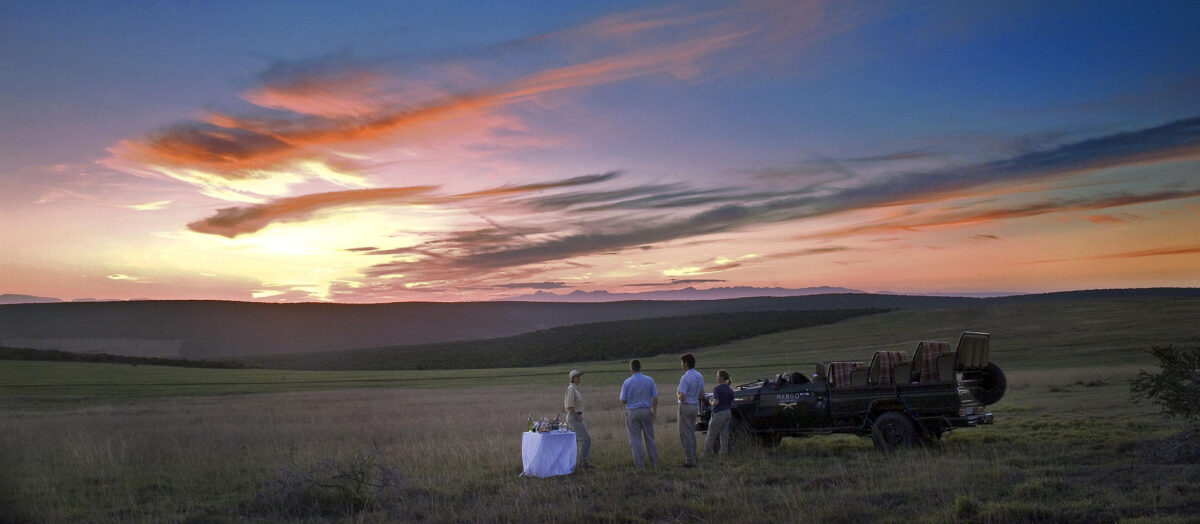
Typically the afternoon drive leaves after tea, giving you a couple of hours of light before you stop for sundowners in the bush.
This is one of the most-loved safari rituals: golden light, a drink in hand, and the bush settling into evening.
After sundowners, there’s often a sense of anticipation as nocturnal species begin to move and hunt.
Evening: Dinner under the stars & Night drive (where permitted)
You return to camp in the early evening, freshen up, and many people gravitate to the campfire or bar to soak up the atmosphere.
Dinner is often enjoyed in an open boma (reed enclosure) under a starlit sky, or around an open fire: an evocative highlight for many travellers.
A few camps (mainly in Zimbabwe and Zambia) also offer the option of an after dinner night drive.
Important Note
Remember safari lodges in prime game-viewing areas with lots of predator activity may not be able to offer a wide range of activities but the quality of game-viewing is worth it. (So bush dinners may not be possible if there is too much predator activity around.)
Meals: you won’t go hungry
Most lodges include the traditional rhythm of meals: typically breakfast/brunch, lunch, afternoon tea and dinner. (You may loosen your belt a notch by the end of the trip!).
Some camps do a more sensible version: a late breakfast/brunch and then a substantial high tea / late lunch in the mid-afternoon, just before the game drive. (This is also useful for new arrivals into camp.)
Either way, there’s always something to eat when you arrive in camp in the early afternoon.
Sleep-Outs: Sleeping out under the stars
A few camps offer sleep-outs — either on your deck with a roll-away bed (if it is sufficiently raised). Or in a separate treehouse-style platform away from camp.
It’s very special… and not for everyone. Expect a mosquito net, a romantic picnic supper, a radio link back to camp in case you get nervous, and more basic facilities, such as an eco toilet and a basin (as you can shower can you get back to your room). Rustic romance at its finest.
It’s nearly always at an extra cost because your room in camp is kept for you.
LINK: 10 of the Best Sleep-Out or Star Beds in South Africa
Links
- Back to First Time on Safari
- Types of Safari Accommodation – so you can picture where you’ll be staying