What do Meerkats eat?
Meerkats are omnivores. They are masters of catching insects, small rodents, snakes, and geckos with lightning swiftness. While foraging, their keen sense of smell helps them locate their favourite insect snacks – beetles, termites, caterpillars, spiders, and scorpions. (Interestingly, they appear to be immune to the venom of certain snakes and scorpions!) Meerkats may also eat birds, eggs, fruits, and plants.
In the dry season (though they barely need extra water in their diets), meerkats will obtain water by digging up roots and succulent tubers.
How do Meerkats hunt?
Every morning, after a session of sunbathing and grooming, the mob emerges from their burrow and begins to forage for food. They forage for approximately five to eight hours per day. While they forage, the mob members vocalize softly to maintain contact. They locate their prey in crevices and under stones or logs with help from their trusty sidekick: their keen sense of smell. Then, they fiercely dig up their catch and feast. They typically don’t give chase to their prey, but they may pursue geckos and lizards over some metres.
When catching scorpions, meerkats grab the arachnid so fast that it barely has a chance to attack. Then, the meerkat bites off the scorpion’s stinger, discards it, and rubs the scorpion in the sand to rid of excess venom on its exoskeleton. A pretty nifty technique, don’t you think? For larger prey, they use their long claws to batter it before tearing it to pieces.
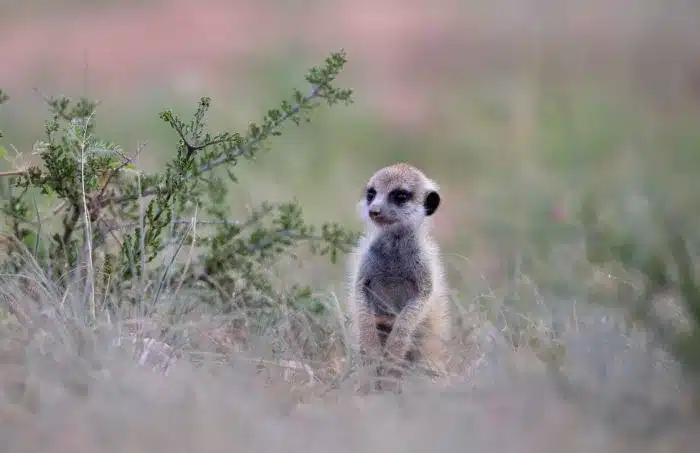
During foraging, at least one meerkat (called a sentinel/sentry) will find a high spot such as a tree branch or termite mound to keep a lookout for predators. While the others dig around for food, the sentinel will sit upright, scanning the sky for eagles and hawks, and the desert for jackals. If danger is sensed, it will alert the rest of the mob with a high-pitched call. The foragers then scatter for cover in their boltholes. Mob members, in no particular order, take turns to keep watch. Talk about teamwork!